Introduction
Menopause weight gain statistics show that many women begin gaining weight during perimenopause and often continue gaining through their 50s. Mayo Clinic reports that weight gain often continues at about 1.5 pounds per year during a woman’s 50s, while CDC data shows obesity remains especially common among adults aged 40–59.
But here is the part most women need to hear: menopause weight gain is common, but it is not a personal failure. It is usually a mix of hormonal shifts, aging, muscle loss, sleep changes, stress, lifestyle, and genetics.
This guide breaks down the numbers in a simple, honest, research-backed way so you can understand what is really happening in your body, and what you can do about it.

Key Takeaways
- Women commonly gain weight during perimenopause and menopause.
- Mayo Clinic reports that weight gain may continue at about 1.5 pounds per year through the 50s.
- Menopause often shifts fat storage toward the abdomen.
- Muscle mass tends to decline with age, which can reduce daily calorie burn.
- CDC recommends 150 minutes of moderate activity weekly plus 2 days of strength training for adults.
- Weight gain after 40 is manageable with strength training, protein, fiber, sleep, stress control, and realistic calorie awareness.
Menopause Weight Gain Statistics at a Glance
| Statistic | What It Means for Women Over 40 |
| About 1.5 pounds per year may be gained through the 50s | Small yearly gains can become noticeable over time |
| U.S. adult obesity prevalence was 40.3% in 2021–2023 | Midlife weight struggles are common, not isolated |
| Obesity prevalence was higher among adults aged 40–59 | Midlife is a key risk window |
| Severe obesity was higher in women than men | Women face unique biological and hormonal risks |
| Adults need 150 minutes of weekly moderate activity | Movement matters for prevention and management |
| Adults need 2 days of strength training weekly | Muscle preservation is critical after 40 |
1. Menopause Weight Gain Often Starts Before Menopause
Many women think weight gain begins only after their periods stop. In reality, it often begins during perimenopause, the transition years before menopause.
Mayo Clinic notes that weight gain often starts a few years before menopause and may continue during the menopause transition.
This matters because many women blame themselves too late. They think, “Why am I suddenly gaining weight?” But the body may have been shifting for years.
Internal link suggestion: Link this section to your article on Menopause Weight Gain After 40 using anchor text: menopause weight gain after 40.
2. The Average Weight Gain Can Be Around 1.5 Pounds Per Year
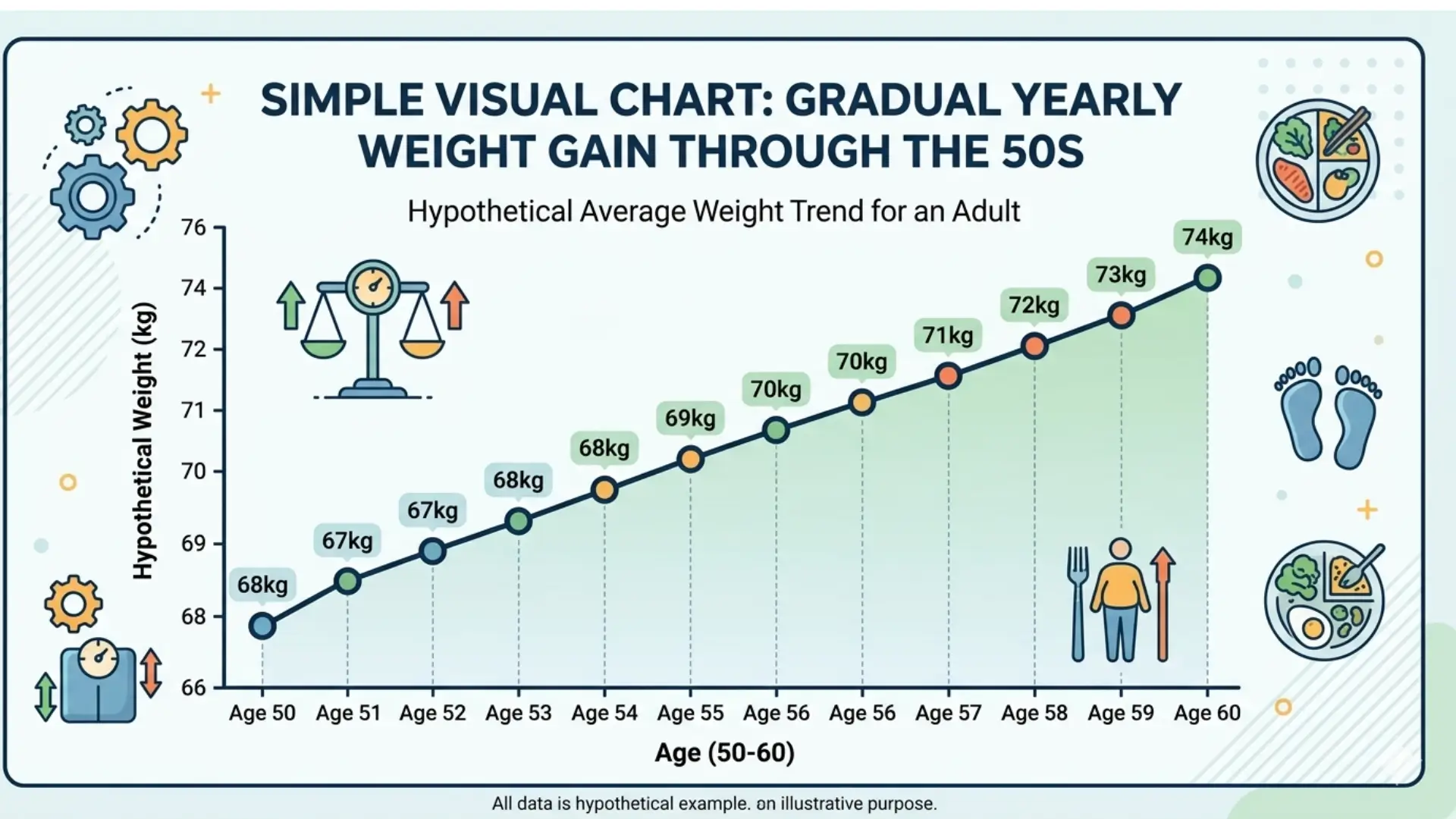
One of the most important menopause weight gain statistics comes from Mayo Clinic: women may gain weight at about 1.5 pounds per year through their 50s.
That may sound small, but look at what happens over time:
| Time Period | Possible Weight Gain |
| 1 year | 1.5 pounds |
| 3 years | 4.5 pounds |
| 5 years | 7.5 pounds |
| 10 years | 15 pounds |
This is why menopause weight gain can feel “sudden,” even when it builds gradually.
Internal link suggestion: Link to your article on What Is the Average Weight Gain During Menopause?
3. Belly Fat Becomes More Common After Menopause
Menopause does not only affect the number on the scale. It can also affect where fat is stored.
Mayo Clinic explains that hormonal changes during menopause make women more likely to gain weight around the abdomen instead of the hips and thighs.
This is why some women say:
“I weigh almost the same, but my waist is bigger.”
That waist change matters because abdominal fat, especially visceral fat, is linked with higher health risks.
Internal link suggestion: Link to How to Get Rid of Menopause Belly Fat using anchor text: menopause belly fat.
4. Hormones Matter, But They Are Not the Only Cause
Estrogen decline is part of the story, but not the whole story.
Mayo Clinic notes that hormonal changes alone do not necessarily cause menopause weight gain. Aging, lifestyle, genetics, and muscle loss also play important roles.
That is actually hopeful.
Why? Because while you cannot stop menopause, you can influence many lifestyle factors around it.
5. Muscle Loss Can Reduce Calorie Burn
As women age, muscle mass tends to decline. Less muscle can mean a lower resting metabolism.
This is one reason the same meals and same activity level that worked at 35 may not work the same way at 48 or 55.
Think of muscle as your metabolic engine. The more muscle you preserve, the better your body can handle calories, blood sugar, posture, movement, and long-term independence.
Internal link suggestion: Link to How to Boost Metabolism After 40 using anchor text: boost metabolism after 40.
6. Adults Aged 40–59 Have High Obesity Rates
CDC data from August 2021–August 2023 found that U.S. adult obesity prevalence was 40.3%, and obesity was higher among adults aged 40–59 compared with younger and older adults.
This shows that midlife weight gain is not rare. It is a major public health issue.
For your readers, this data can feel validating. Many women are not “lazy” or “undisciplined.” They are navigating a biological, social, and lifestyle transition that millions of women experience.
7. Severe Obesity Is Higher in Women Than Men
CDC’s 2021–2023 data also found that severe obesity was higher in women than men overall. Severe obesity prevalence was 12.1% in women compared with 6.7% in men.
This is important because menopause-related weight gain is not just about appearance. It can affect long-term health, mobility, confidence, and disease risk.
8. Weight Gain Is Often Linked to Lower Activity Levels
Many women move less in midlife without realizing it.
This can happen because of:
- work stress
- caregiving responsibilities
- joint pain
- poor sleep
- low mood
- fatigue
- hot flashes
- reduced motivation
CDC recommends adults get at least 150 minutes of moderate-intensity physical activity per week and 2 days of muscle-strengthening activity.
That does not mean you need to live in the gym. Brisk walking, resistance bands, bodyweight exercises, swimming, cycling, and simple strength workouts all count.
Internal link suggestion: Link to HIIT Workouts for Women Over 40 only where intense exercise is discussed.
9. Strength Training Is One of the Most Important Tools After 40
For menopause weight management, strength training deserves special attention.
Cardio helps burn calories and supports heart health, but strength training helps preserve muscle. That matters because muscle loss can make fat gain easier over time.

A good beginner routine may include:
- squats or chair squats
- wall push-ups
- resistance band rows
- glute bridges
- light dumbbell presses
- step-ups
- core stability exercises
Start gently. Consistency is more important than perfection.
10. Menopause Weight Gain Is Not Always About Eating More
One frustrating thing women often report is:
“I am not eating more, but I am still gaining weight.”
That can happen because your body’s energy needs may shift with age, muscle loss, and activity changes.
So the issue may not be that you suddenly became careless. It may be that your old routine no longer matches your current biology.
Internal link suggestion: Link to Calorie Needs for Women using anchor text: calorie needs for women over 40.
11. Sleep Problems Can Make Weight Management Harder
Menopause can disrupt sleep through hot flashes, night sweats, anxiety, and hormonal changes.
Poor sleep may affect:
- appetite
- cravings
- insulin sensitivity
- motivation to exercise
- stress hormones
- decision-making around food
So when a woman says, “I know what to do, but I am exhausted,” that is not an excuse. It is a real barrier.
A menopause weight loss plan that ignores sleep is incomplete.
12. Stress Can Contribute to Belly Fat
Midlife can be emotionally full. Children, marriage, work, aging parents, money worries, and body changes can all collide at once.
Chronic stress may increase cravings, emotional eating, poor sleep, and abdominal weight gain patterns.
This is why stress management is not “soft advice.” It is part of metabolic health.
Helpful tools include:
- walking
- prayer or meditation
- journaling
- therapy or support groups
- deep breathing
- strength training
- better sleep routines
13. Diet Quality Matters More Than Crash Dieting
Many women over 40 try very strict diets because they feel desperate. But crash dieting can backfire, especially if it leads to muscle loss, binge eating, or fatigue.
A better menopause-friendly eating pattern usually includes:
- lean protein
- high-fiber vegetables
- fruits
- beans and lentils
- whole grains
- healthy fats
- water
- fewer ultra-processed foods
- less added sugar and alcohol
Internal link suggestion: Link to Best Diet for Menopause Weight Loss using anchor text: best diet for menopause weight loss.

14. Protein Becomes More Important After 40
Protein helps preserve muscle, supports fullness, and makes weight management easier.
Good protein sources include:
- eggs
- Greek yogurt
- fish
- chicken
- turkey
- tofu
- beans
- cottage cheese
- lentils
- protein smoothies
For women struggling with cravings, adding protein at breakfast can be a simple but powerful change.
15. Fiber Helps With Fullness and Blood Sugar
Fiber-rich foods can support digestion, fullness, cholesterol, blood sugar balance, and weight control.
Good sources include:
- oats
- berries
- beans
- lentils
- chia seeds
- vegetables
- apples
- whole grains
A plate with protein, fiber, and healthy fats is often more satisfying than a low-calorie snack that leaves you hungry an hour later.
16. Menopause Weight Gain Can Affect Confidence
The emotional side matters too.
Many women are not only frustrated by the weight. They feel betrayed by their bodies. Clothes fit differently. Photos feel uncomfortable. Compliments may feel rare. Confidence can quietly shrink.
This is why your website has an important role. Women need science, yes — but they also need compassion.
Internal link suggestion: Link to Confidence Building After 40 using anchor text: confidence after 40.
17. Belly Fat Is Not Just Cosmetic
Abdominal fat matters because it can be linked with a higher risk of:
- type 2 diabetes
- heart disease
- high blood pressure
- metabolic syndrome
- fatty liver disease
This does not mean women should panic. It means waist changes deserve attention, not shame.
18. Weight Loss After 40 Requires a Different Strategy
The old “eat less, move more” advice is too simplistic.
Women over 40 often need a smarter plan:
- strength training
- enough protein
- fiber-rich meals
- better sleep
- stress control
- realistic calorie awareness
- less alcohol
- consistent walking
- medical checkups when needed
The goal is not to punish the body. The goal is to work with the body.
19. Menopause Weight Gain Is Manageable
Here is the good news: common does not mean unavoidable.
Mayo Clinic emphasizes that menopause-related weight gain can be minimized with healthy eating habits and an active lifestyle.
Even small changes can add up:
| Habit | Why It Helps |
| Strength training 2x weekly | Preserves muscle |
| Walking most days | Supports calorie burn and mood |
| Protein at breakfast | Reduces cravings |
| More vegetables | Increases fiber and fullness |
| Better sleep routine | Supports appetite regulation |
| Stress management | Helps reduce emotional eating |
| Less alcohol | Reduces empty calories and sleep disruption |
20. The Scale Is Not the Only Measurement
During menopause, body composition can change even when scale weight changes slowly.
Track more than weight:
- waist measurement
- strength gains
- energy
- sleep
- cravings
- blood pressure
- blood sugar
- How clothes fit
- Consistent with habits
Sometimes progress begins inside before it shows outside.
35 Menopause Weight Gain Statistics and Facts
Here are the key facts in one place:
- Weight gain commonly begins during perimenopause.
- Weight gain may continue through the 50s.
- Mayo Clinic reports weight gain may average about 1.5 pounds yearly in the 50s.
- Hormonal changes can shift fat toward the abdomen.
- Estrogen decline is linked with body-fat distribution changes.
- Hormones alone do not explain all menopause weight gain.
- Aging is a major contributor.
- Muscle mass tends to decline with age.
- Less muscle can reduce calorie burn.
- Lifestyle changes affect weight after 40.
- Genetics influence menopause weight patterns.
- Sleep disruption can affect appetite and cravings.
- Stress may contribute to abdominal fat gain.
- CDC reports adult obesity prevalence was 40.3% in 2021–2023.
- Obesity prevalence was higher among adults aged 40–59.
- Severe obesity was higher in women than in men.
- Severe obesity prevalence was 12.1% in women.
- Severe obesity prevalence was 6.7% in men.
- Adults need 150 minutes of moderate activity weekly.
- Adults need 2 days of strength training weekly.
- Brisk walking counts as moderate activity.
- Resistance training helps preserve muscle.
- Protein supports fullness and muscle maintenance.
- Fiber supports appetite control and digestion.
- Alcohol can worsen sleep and add calories.
- Belly fat may increase health risks.
- Waist measurement can be useful after menopause.
- Crash dieting may increase the risk of muscle loss.
- Strength training is especially important after 40.
- Walking is a beginner-friendly fat-loss habit.
- Menopause weight gain is common but manageable.
- Medical conditions like thyroid issues can affect weight.
- Medications may influence weight in some women.
- Sustainable habits matter more than short-term dieting.
- A research-backed plan should include food, movement, sleep, stress, and medical support when needed.
Practical Plan: What Women Over 40 Can Do This Week
Here is a realistic 7-day starting plan.
| Day | Simple Action |
| Monday | 30-minute brisk walk |
| Tuesday | 20-minute strength workout |
| Wednesday | Add protein to breakfast |
| Thursday | 30-minute walk |
| Friday | Add vegetables to 2 meals |
| Saturday | 20-minute strength workout |
| Sunday | Plan meals and sleep routine |
This is not extreme. That is the point.
The best menopause weight loss plan is one you can repeat.
Related Supplement Reviews
Supplements cannot replace nutrition, exercise, sleep, or medical care. But some women like to explore natural support options as part of a broader lifestyle plan.
You can read these related reviews:
FAQs About Menopause Weight Gain Statistics
What is the average weight gain during menopause?
Mayo Clinic reports that women may gain about 1.5 pounds per year through their 50s. Over several years, that can become a noticeable change.
Why does menopause cause belly fat?
Menopause can shift fat storage toward the abdomen because of hormonal changes, especially declining estrogen. Aging, muscle loss, sleep, stress, and lifestyle also play major roles.
Is menopause weight gain inevitable?
No. Menopause weight gain is common, but it is not inevitable. Strength training, walking, protein, fiber, sleep, stress management, and calorie awareness can help reduce or prevent excess gain.
Why am I gaining weight after 40 without eating more?
Your metabolism, muscle mass, activity level, sleep, and hormones may have changed. So your old eating pattern may no longer match your body’s current energy needs.
What exercise is best for menopause weight gain?
A combination of strength training and aerobic activity is best. CDC recommends 150 minutes of moderate activity weekly plus 2 days of muscle-strengthening activity.
How do I stop menopause belly fat?
Start with strength training, walking, enough protein, high-fiber meals, better sleep, stress reduction, and reducing alcohol or ultra-processed foods. If weight gain is sudden or severe, speak with a healthcare provider.
Final Thoughts
Menopause weight gain is not imaginary, and it is not simply about willpower. The statistics show that many women gain weight during midlife, especially around the belly, because the body is changing hormonally, metabolically, and physically.
But the data also gives hope.
Small, consistent habits — strength training, walking, protein, fiber, sleep, and stress management — can help women over 40 feel more in control of their bodies again.
The goal is not to chase your 25-year-old body. The goal is to build a stronger, healthier, more confident version of yourself now.