Introduction
The average weight gain during menopause is often gradual, not sudden. Mayo Clinic reports that many women gain about 1.5 pounds per year as they move through their 50s, and this weight gain often begins a few years before menopause during perimenopause.
That means a woman may not notice much change in one month. But over 5 to 10 years, the scale, waistline, and clothing fit can feel completely different.
And no — this does not mean you have “lost control.” Menopause weight gain is usually caused by a combination of hormonal changes, aging, muscle loss, lower activity levels, poor sleep, stress, genetics, and changing calorie needs.

This guide explains what the numbers really show, why the weight often settles around the belly, and what women over 40 can do to feel strong, informed, and supported.
Key Takeaways
- The average menopause-related weight gain may be around 1.5 pounds per year during the 50s.
- Weight gain often begins in perimenopause, before periods fully stop.
- Menopause often shifts fat storage toward the abdomen, not just the hips and thighs.
- CDC data shows obesity prevalence is higher among adults aged 40–59 than among younger or older adults.
- Muscle loss can lower metabolism, making old eating habits less effective.
- Strength training, walking, protein, fiber, sleep, and stress control are key tools.
Average Weight Gain During Menopause at a Glance
| Question | Evidence-Based Answer |
| How much weight do women gain during menopause? | Often around 1.5 pounds per year through the 50s |
| When does it usually start? | Often during perimenopause |
| Where does the weight go? | More commonly around the abdomen |
| Is it only caused by hormones? | No. Aging, lifestyle, sleep, genetics, and muscle loss also matter |
| Is it preventable? | It can often be reduced or managed |
| Best exercise approach? | Aerobic activity plus strength training |
What Is the Average Weight Gain During Menopause?
The most practical estimate many women can use is this: about 1.5 pounds per year during the 50s. Mayo Clinic states that weight gain often continues at this rate as women go through their 50s.
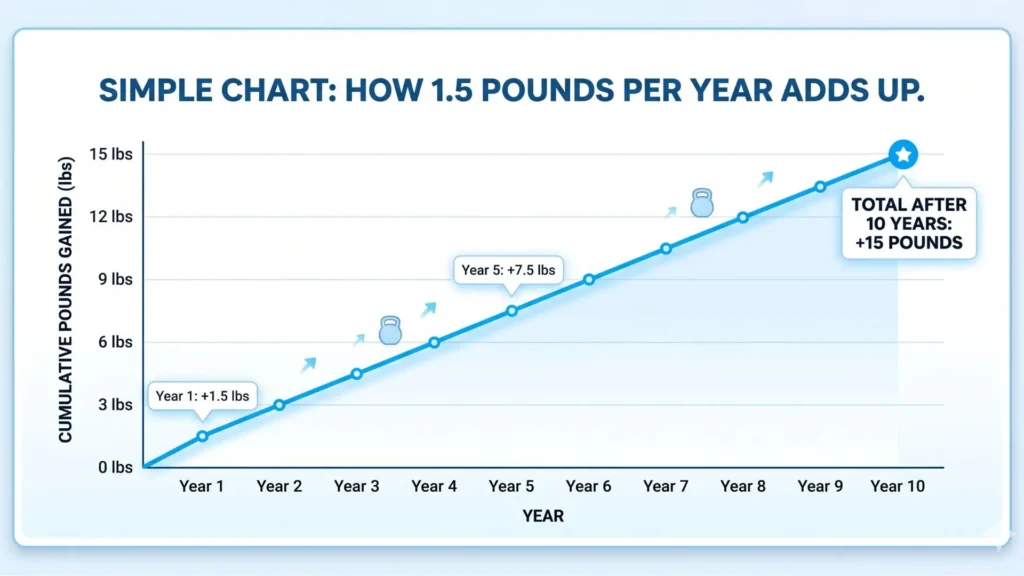
That sounds small, but here is how it can add up:
| Time Period | Possible Weight Gain |
| 1 year | 1.5 pounds |
| 3 years | 4.5 pounds |
| 5 years | 7.5 pounds |
| 10 years | 15 pounds |
This is why menopause weight gain can feel confusing. It may not happen overnight. It may creep in quietly while your life is busy.
One day, your jeans feel tighter. Then your waist looks different. Then you step on the scale and think, “When did this happen?”
Does Every Woman Gain Weight During Menopause?
No, not every woman gains weight during menopause. But many women do experience changes in body composition, waist size, or fat distribution.
Some women gain only a few pounds. Some gain more. Some maintain their weight but notice that their belly is softer or their waist is wider. Others lose muscle and gain fat without a dramatic change on the scale.
This is important because the scale can hide the real story.
A woman may weigh the same but have:
- less muscle
- more belly fat
- poorer sleep
- lower energy
- more cravings
- reduced strength
- Higher waist measurement
So instead of asking only, “How much weight will I gain?” it may be better to ask, “How is my body composition changing?”
Why Does Weight Gain Start Before Menopause?
Menopause is officially reached after 12 months without a menstrual period. But body changes often begin earlier, during perimenopause.
Perimenopause can last several years. During this time, estrogen and progesterone fluctuate. Sleep may become lighter. Hot flashes may appear. Stress sensitivity may increase. Periods may become irregular. Energy may feel unpredictable.
And when sleep, hormones, mood, and energy shift, weight management becomes harder.
You may still be eating “normally,” but your body may not be responding the same way it did in your 30s.
Read more about menopause weight gain after 40.
Why Menopause Weight Often Goes to the Belly
One of the biggest frustrations for women over 40 is not only weight gain, but also belly fat.
Mayo Clinic explains that hormonal changes during menopause make women more likely to gain weight around the abdomen rather than the hips and thighs.
That is why many women say:
“My weight is not even that different, but my stomach has changed.”
This belly change can feel personal. It affects how clothes fit. It changes how you feel in photos. It may even make you feel like your body is becoming unfamiliar.
But the belly shift is not just cosmetic. Extra abdominal fat is linked with a higher risk of type 2 diabetes, heart and blood vessel disease, breathing problems, and some cancers.
Is Menopause Weight Gain Caused by Hormones?
Hormones matter, but they are not the only reason.
Mayo Clinic explains that hormonal changes tend to affect fat distribution, especially around the abdomen. But weight gain itself is usually also connected to aging, lifestyle, and genetics.
So the honest answer is:
Menopause changes the environment inside your body, but lifestyle and aging still influence the outcome.
That is not to blame. That is power.
Because while you cannot stop menopause, you can change your strength routine, protein intake, walking habit, sleep schedule, alcohol intake, stress management, and meal structure.
The Muscle Loss Factor Most Women Miss
Muscle is one of the most important parts of menopause weight management.
As women age, muscle mass tends to decline. Mayo Clinic notes that muscle mass typically goes down with age while fat increases, and losing muscle slows the rate at which the body uses calories. (Mayo Clinic)
That means you may burn fewer calories at rest than you used to.
This explains why some women say:
“I eat the same way I always have, but now I gain weight.”
Your body may simply require fewer calories than it did before, especially if activity has dropped and muscle mass has declined.
Why Your Old Diet May Stop Working
A diet that worked at 32 may not work at 48.
Not because your body is broken.
Because your body is different.
In your 40s and 50s, you may need:
- more protein
- more strength training
- more fiber
- more sleep support
- fewer liquid calories
- fewer ultra-processed foods
- better stress management
- more movement throughout the day
Mayo Clinic notes that women may need about 200 fewer calories per day in their 50s compared with their 30s and 40s to maintain weight.
That does not mean starving yourself. It means becoming more intentional with food quality, portions, and daily movement.
Midlife Weight Gain Is Common in Population Data
CDC data from August 2021 to August 2023 found adult obesity prevalence in the United States was 40.3%, and obesity prevalence was higher among adults aged 40–59 than among adults aged 20–39 and 60 and older.
This matters because women over 40 often feel alone.
They may think everyone else is managing perfectly. But the public health data shows midlife weight gain and obesity are widespread issues.
In CDC’s 2017–March 2020 data, obesity prevalence was 44.3% among adults aged 40–59, compared with 39.8% among adults aged 20–39.
So if this season feels harder, you are not imagining it.
Why Weight Gain Can Feel Sudden
Menopause weight gain often feels sudden because the visible signs may appear after years of quiet changes.
For example:
| Hidden Change | Visible Result |
| Less muscle | Lower calorie burn |
| Poorer sleep | More cravings |
| Lower estrogen | More abdominal fat storage |
| Less activity | Gradual weight gain |
| More stress | Emotional eating |
| Same diet as before | Calorie surplus over time |
This is why many women say, “I woke up one day with a menopause belly.”
Usually, the body was giving signals earlier. They were just easy to miss.
How Much Weight Gain Is “Normal”?
This is a delicate question.
A small amount of weight gain during midlife is common. But “common” does not always mean harmless. The more important question is whether the weight gain is affecting your waist size, blood pressure, blood sugar, cholesterol, joints, sleep, energy, or confidence.
You may want to speak with a healthcare provider if you notice:
- sudden unexplained weight gain
- extreme fatigue
- hair loss
- cold intolerance
- swelling
- depression
- Irregular bleeding after menopause
- rapid belly enlargement
- Symptoms of thyroid problems
- signs of diabetes
A good menopause plan should include self-compassion and medical awareness.
What Is the Health Risk of Menopause Weight Gain?
Extra weight around the midsection may increase the risk of:
- type 2 diabetes
- cardiovascular disease
- high blood pressure
- breathing problems
- some cancers
- fatty liver disease
- joint pain
- reduced mobility
Mayo Clinic notes that extra weight, especially around the midsection, raises risks for heart and blood vessel disease, type 2 diabetes, breathing problems, and certain cancers.
This is why menopause weight gain should not be dismissed as vanity.
It is a real health issue — but one that can be approached gently and intelligently.
What Helps Prevent Average Menopause Weight Gain?
There is no magic formula. But there are proven basics.

1. Strength Train at Least Twice Weekly
CDC recommends adults do muscle-strengthening activity at least 2 days per week.
Strength training helps protect muscle, which supports metabolism and body composition.
Beginner-friendly options include:
- resistance bands
- dumbbells
- bodyweight squats
- wall push-ups
- step-ups
- glute bridges
- seated rows
- Pilates-style strength work
You do not need to lift heavy on day one. Start where you are.
2. Walk More Often
Walking is underrated.
It helps with:
- calorie burn
- blood sugar control
- mood
- digestion
- stress
- sleep
- joint-friendly movement
A 20- to 30-minute walk after meals can be especially helpful for women dealing with blood sugar swings or cravings.
3. Eat More Protein
Protein supports muscle maintenance and fullness.
Helpful protein foods include:
- eggs
- Greek yogurt
- fish
- chicken
- turkey
- tofu
- cottage cheese
- beans
- lentils
- protein smoothies
A high-protein breakfast can reduce the urge to snack all morning.

4. Increase Fiber
Fiber helps with fullness, gut health, cholesterol, and blood sugar balance.
Good sources include:
- oats
- berries
- beans
- lentils
- vegetables
- chia seeds
- flaxseed
- apples
- whole grains
5. Sleep As It Matters
Because it does.
Menopause sleep disruption can affect appetite, cravings, mood, and motivation. If night sweats or insomnia are ruining your sleep, weight loss will feel harder.
Simple sleep supports:
- Keep the room cool
- reduce alcohol
- Limit late caffeine
- Use breathable sleepwear
- create a wind-down routine
- Speak with a doctor about severe hot flashes
6. Reduce Liquid Calories and Alcohol
Alcohol can make menopause weight gain worse for several reasons. It adds calories, may disrupt sleep, can increase cravings, and may reduce your ability to make good food decisions the next day.
You do not have to be perfect. But if belly fat is increasing, alcohol is worth reviewing honestly.
A Realistic Menopause Weight Management Plan
Here is a beginner-friendly weekly plan:
| Habit | Weekly Goal |
| Walking | 25–30 minutes, 4–5 days weekly |
| Strength training | 2 days weekly |
| Protein | Include at breakfast and lunch |
| Fiber | Add vegetables or beans daily |
| Sleep | Set a consistent bedtime |
| Stress | 5–10 minutes daily breathing, prayer, or journaling |
| Tracking | Measure your waist once a month |
This is not a punishment plan. It is a support plan.
The goal is to give your body better signals.
What Not to Do When Menopause Weight Gain Starts
Avoid these common mistakes:
Mistake 1: Cutting Calories Too Low
Very low-calorie diets can leave you tired, hungry, and more likely to lose muscle.
Mistake 2: Doing Only Cardio
Cardio is helpful, but strength training is essential after 40.
Mistake 3: Ignoring Sleep
Poor sleep can quietly sabotage even a good diet.
Mistake 4: Blaming Yourself
Shame does not burn fat. Structure, support, and consistency work better.
Mistake 5: Trying Every Supplement Without Fixing Basics
Supplements may support your routine, but they cannot replace food quality, movement, sleep, and medical care.
Related Supplement Reviews
Some women like to explore supplement support while also improving nutrition, movement, and sleep. Supplements should not replace medical care or lifestyle habits, but a balanced review can help you make a more informed choice.
You can read:
FAQs About Average Weight Gain During Menopause
Mayo Clinic reports that weight gain often continues at about 1.5 pounds per year as women go through their 50s.
It often starts during perimenopause, which can begin years before menopause is officially reached.
Hormonal changes can make women more likely to gain weight around the abdomen instead of the hips and thighs. Aging, muscle loss, sleep, stress, and lifestyle also contribute.
It can often be reduced or managed with strength training, aerobic activity, protein, fiber, sleep support, stress control, and realistic calorie awareness.
You may have less muscle, lower daily activity, poorer sleep, and different calorie needs than before. Mayo Clinic notes that women in their 50s may need about 200 fewer calories per day than in their 30s and 40s to maintain weight.
It can be. Extra weight around the midsection is linked with a higher risk of heart and blood vessel disease, type 2 diabetes, breathing problems, and certain cancers.