How Long Does Menopause Weight Gain Last?
Menopause weight gain typically develops gradually over four to eight years during the menopausal transition, often beginning in perimenopause and continuing into early postmenopause. Many women gain weight slowly—about 1 to 1.5 pounds per year during this stage of life.
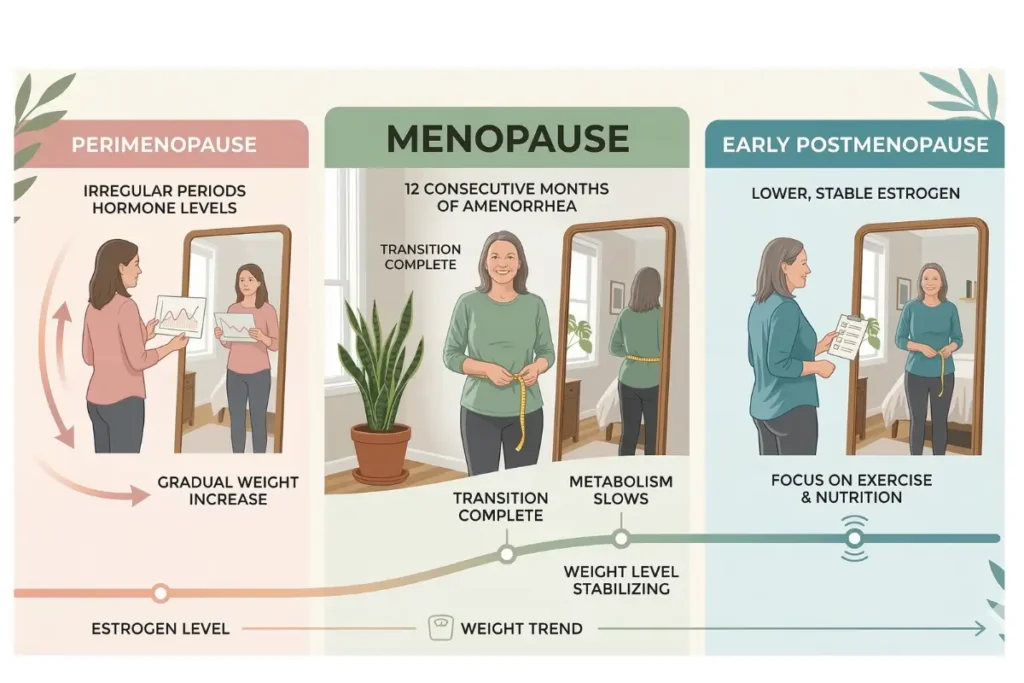
Once hormones stabilise after menopause, weight gain often slows or stops, especially when healthy habits such as strength training, balanced nutrition, and good sleep support metabolism.
Understanding how long menopause weight gain lasts helps women over 40 take proactive steps to protect metabolic health and prevent long-term weight gain.
Who This Guide Is For
This guide is for women over 40 experiencing perimenopause or menopause who are noticing midlife weight gain and wondering:
- Why did the weight gain start?
- How long does menopause weight gain typically last?
- When weight stabilises after menopause
- Whether menopause-related weight gain is permanent
- What steps help reverse it
If your body suddenly feels different—even though your habits haven’t changed—you’re not alone. Hormonal changes during menopause can significantly affect metabolism and fat storage.
When Does Menopause Weight Gain Usually Begin?

Weight gain related to menopause typically begins during perimenopause, the transitional stage leading up to menopause.
Perimenopause can start four to ten years before the final menstrual period. During this time, estrogen and progesterone levels fluctuate significantly.
These hormonal changes can trigger several metabolic shifts, including:
- Slower metabolic rate
- Increased fat storage, especially around the abdomen
- Changes in appetite and hunger hormones
- Reduced muscle mass
- Greater insulin resistance
Because these changes happen gradually, many women do not initially connect weight gain to menopause.
How Long Does Menopause Weight Gain Last? (Typical Timeline)
| Stage | What Happens |
|---|---|
| Early Perimenopause | Metabolism slows, and belly fat becomes more noticeable |
| Late Perimenopause | Hormone levels drop sharply, and fat redistribution occurs |
| Menopause | Hormones stabilize, and weight gain may slow |
| Postmenopause | Hormones stabilise, and weight gain may slow |
Why Menopause Weight Gain Happens Gradually
Menopause weight gain rarely occurs overnight. Instead, it typically develops slowly due to several biological changes happening simultaneously.
Slower Metabolic Rate
As women age, resting metabolic rate naturally decreases. This means the body burns fewer calories at rest than it did during younger years.
Even a small daily calorie surplus can lead to gradual weight gain.
Hormonal Changes
Declining estrogen affects where fat is stored in the body. Instead of storing fat in the hips and thighs, many women begin storing more fat around the abdomen.
This is why menopause belly fat becomes more common during midlife.
Muscle Loss
Women naturally lose muscle mass as they age. Because muscle burns more calories than fat, losing muscle reduces the number of calories the body burns daily.
Without strength training, muscle loss can significantly slow metabolism.
Lifestyle Changes
Many women become less physically active during midlife due to busy schedules, family responsibilities, or fatigue related to menopause symptoms.
These combined factors explain why menopause-related weight gain often feels gradual yet persistent.
Does Menopause Weight Gain Stop After Menopause?
For a quick expert overview, this Mayo Clinic video explains why menopause weight gain happens and what women can do to manage it.
Many women worry that menopause weight gain will continue indefinitely.
The encouraging news is that weight gain often slows once hormone levels stabilise after menopause.
However, metabolism may remain slower than during earlier decades. Without lifestyle adjustments, weight may still gradually increase due to normal ageing.
The key difference is that once hormones stabilise, the body becomes more predictable, making weight management easier with consistent habits.
Is Menopause Weight Gain Permanent?
Menopause weight gain is not necessarily permanent.
Although hormonal changes can make weight management more challenging, many women successfully lose weight after menopause.
Several factors determine whether menopause-related weight gain becomes permanent:
- Physical activity levels
- Strength training habits
- Diet quality
- Sleep patterns
- Stress management
- Overall metabolic health
Women who maintain healthy habits during midlife are significantly more likely to maintain a stable body weight after menopause.
How Long Does Menopause Belly Fat Last?
Belly fat during menopause is one of the most common concerns for women in midlife.
Declining estrogen levels cause the body to shift fat storage toward the abdomen, increasing the likelihood of visceral fat accumulation.

For many women, menopause belly fat can develop during perimenopause and early postmenopause, but it can improve once metabolism is supported through:
- Strength training
- Adequate protein intake
- Daily movement
- Improved sleep
- Reduced stress
With consistent lifestyle changes, abdominal fat can gradually decrease.
How Long Does It Take to Lose Menopause Weight?
Losing menopause weight often takes longer than weight loss earlier in life, but it is still very achievable.
Most experts recommend aiming for 0.5 to 1 pound of weight loss per week for sustainable progress.
Several factors influence how quickly menopause weight can be lost:
- Muscle mass
- Nutrition habits
- Physical activity levels
- Sleep quality
- Stress levels
- Hormonal health
For example, a woman who gained 10–15 pounds during the menopausal transition may gradually lose that weight over several months to a year by improving diet quality, building muscle, and supporting metabolic health.
The goal should be long-term metabolic health rather than rapid dieting.
How to Prevent Ongoing Weight Gain During Menopause
Although menopause increases the risk of weight gain, several evidence-based strategies can help prevent it.
Prioritise Strength Training
Strength training helps maintain muscle mass and metabolic rate.
Experts recommend performing strength training exercises two to three times per week, targeting major muscle groups.
Increase Daily Movement
Daily physical activity increases calorie expenditure and improves insulin sensitivity.
Examples include:
- Walking
- Gardening
- Household activity
- Yoga or stretching
A goal of 7,000 to 8,000 steps per day can help support metabolic health.
Focus on Protein Intake
Adequate protein intake helps preserve muscle mass and improve satiety.
Many nutrition experts recommend 20–30 grams of protein per meal for women over 40.
Improve Sleep Quality

Poor sleep can increase hunger hormones and promote fat storage.
Improving sleep habits—such as maintaining a consistent bedtime and limiting caffeine late in the day—can support healthy weight regulation.
Manage Stress
Chronic stress increases cortisol levels, which can contribute to abdominal fat accumulation.
Stress-management strategies such as walking, meditation, or deep breathing can help regulate hormones and metabolism.
When Should Women Be Concerned About Menopause Weight Gain?
Gradual weight gain during menopause is common. However, certain symptoms may require medical evaluation.
Women should consult a healthcare professional if they experience:
- Rapid unexplained weight gain
- Persistent fatigue
- Severe bloating
- Sudden changes in appetite
- Symptoms of thyroid dysfunction
Conditions such as thyroid disorders, insulin resistance, or metabolic syndrome can contribute to weight gain and may require medical treatment.
Key Takeaways
Menopause weight gain often develops gradually over several years during the menopausal transition.
Most women begin gaining weight during perimenopause, and weight gain may continue into early postmenopause.
Hormonal changes, muscle loss, and slower metabolism all contribute to midlife weight gain.
For many women, weight gain slows once hormone levels stabilise after menopause.
Healthy lifestyle habits—such as strength training, balanced nutrition, and adequate sleep—can significantly reduce menopause-related weight gain.
Understanding how long menopause-related weight gain lasts helps women make proactive choices that support long-term metabolic health.
Frequently Asked Questions
Menopause weight gain often lasts four to eight years, typically beginning during perimenopause and continuing into early postmenopause.
Weight gain often slows once hormone levels stabilise after menopause, usually within a few years after the final menstrual period.
Declining estrogen levels shift fat storage toward the abdomen, increasing abdominal fat during menopause.
Yes. Many women successfully lose weight after menopause through regular exercise, strength training, balanced nutrition, and improved sleep habits.
Weight gain during menopause can improve over time. While metabolism slows with age, healthy lifestyle habits can help reduce weight and prevent additional gain.
Conclusion
Weight gain during menopause is common for many women, but it typically develops gradually and does not persist indefinitely. Most weight gain occurs during the menopausal transition and stabilises once hormones stabilise in postmenopause.
By understanding how long menopause-related weight gain lasts and supporting their bodies with healthy habits, women can maintain a healthy weight, protect metabolic health, and feel stronger throughout midlife and beyond.