Introduction to Mediterranean Diet and Menopause Weight Gain
Menopause weight gain can feel frustrating because it often shows up as more belly fat, a slower-feeling metabolism, lower energy, and a body that no longer responds to old dieting tricks the same way it once did. Hormonal changes during menopause make abdominal fat gain more likely, while ageing, muscle loss, sleep disruption, and lifestyle factors can also contribute.
Yes, the Mediterranean diet may help with menopause weight gain. It can support weight management by improving food quality, making meals more satisfying, supporting blood sugar control, and being easier to follow long-term than extreme diets. It works best when combined with enough protein, portion awareness, good sleep, walking, and resistance training.
For women over 40 who want to maintain a healthy body shape, feel strong, and improve waist management without living on a punishing diet, Mediterranean-style eating is one of the most practical options. Research in menopausal women suggests benefits may include improvements in weight-related measures and cardiometabolic markers such as triglycerides, total cholesterol, LDL cholesterol, and blood pressure.

Definition:
The Mediterranean diet is a plant-forward eating pattern centred on vegetables, fruit, legumes, whole grains, fish, olive oil, nuts, seeds, and moderate dairy, while limiting ultra-processed foods and excess saturated fat.
Medical note:
This article is educational and not a substitute for personal medical care. Women with diabetes, thyroid disease, kidney disease, a history of eating disorders, or recent medication changes should speak with a clinician or registered dietitian before making major diet changes.
Why Menopause Causes Weight Gain
Menopause weight gain is driven by more than calories alone. Hormonal shifts, ageing, lower muscle mass, sleep disruption, changes in appetite, and reduced daily movement can all influence how weight is gained and where fat is stored. Mayo Clinic notes that hormonal changes during menopause make abdominal weight gain more likely, even though hormones are not the only factor.
If you’re still trying to understand why your body suddenly stores more fat around the waist, start with this guide to menopause weight gain after 40.
Hormone Shifts and Belly Fat

A drop in estrogen is linked with a shift toward more fat storage around the midsection. This is one reason many women notice more belly fat during perimenopause and postmenopause, even if their scale weight changes only modestly. Reviews of midlife body-composition changes report an increase in central and visceral fat during this transition, which is important because abdominal fat is more closely associated with cardiometabolic risk.
That is why the scale can feel misleading. A woman may gain only a small amount of weight, yet feel very different because her waist circumference and body composition have changed.
If belly fat is your biggest concern, these practical menopause belly fat tips can help you connect nutrition with daily habits that actually support waist loss.”
Why Old Diets Stop Working
Many midlife women find that aggressive dieting no longer works as well as it used to. As muscle mass declines with age, calorie needs can fall, and overly restrictive eating may increase hunger, fatigue, and rebound overeating. The Menopause Society recommends adequate protein and regular activity to help preserve muscle mass and support weight management in midlife.
If your old “eat less and do more cardio” plan now leaves you exhausted and stuck, that does not necessarily mean you lack discipline. It may mean your body needs a more sustainable approach that protects lean mass and helps control appetite.
Why the Mediterranean Diet Helps During Menopause
Watch the Video: How the Mediterranean Diet Can Help with Menopause-Related Weight Gain
The Mediterranean diet benefits by combining satiety, nutritional quality, and sustainability. Instead of cutting out whole food groups, it focuses on minimally processed foods that are naturally rich in fibre, healthy fats, and key nutrients. Cleveland Clinic describes it as an eating pattern centred on vegetables, fruit, whole grains, beans, nuts, fish, and olive oil.
A 2024 systematic review of Mediterranean diet interventions in menopausal women found that higher adherence was associated with improvements in several cardiometabolic markers, and some included studies also reported beneficial effects on weight-related outcomes.
If you require a general Mediterranean diet basics article, here is a resource for “Mediterranean diet basics.”
If you want a broader framework beyond Mediterranean-style eating, this best menopause diet plan for weight loss after 40 guide can help you compare meal structure, calories, protein, and fibre.
Anti-Inflammatory Benefits
Mediterranean-style eating emphasises foods often associated with lower inflammation, including extra-virgin olive oil, nuts, legumes, fish, fruit, and vegetables. Cleveland Clinic notes that this pattern supports healthier cholesterol, blood sugar, and long-term disease risk through its focus on whole foods and unsaturated fats.
That does not mean it cures menopause symptoms. A more accurate claim is that it supports overall metabolic and cardiovascular health during a life stage when those systems may need extra support.
Blood Sugar and Appetite Support
One reason the Mediterranean diet is useful for menopause belly fat is that it can make meals more filling. Protein, fibre, and healthy fats tend to improve satiety compared with low-protein or highly refined meals. Cleveland Clinic specifically highlights fibre-rich carbohydrates and healthy fats as part of the pattern’s support for healthy blood sugar and fullness.
This can matter more than people think. Poor sleep, fluctuating appetite, and more cravings can make menopause weight gain harder to manage, and Mayo Clinic notes that sleep problems can contribute to excess calorie intake during menopause.
Best Foods to Eat on a Mediterranean Diet for Menopause Weight Gain
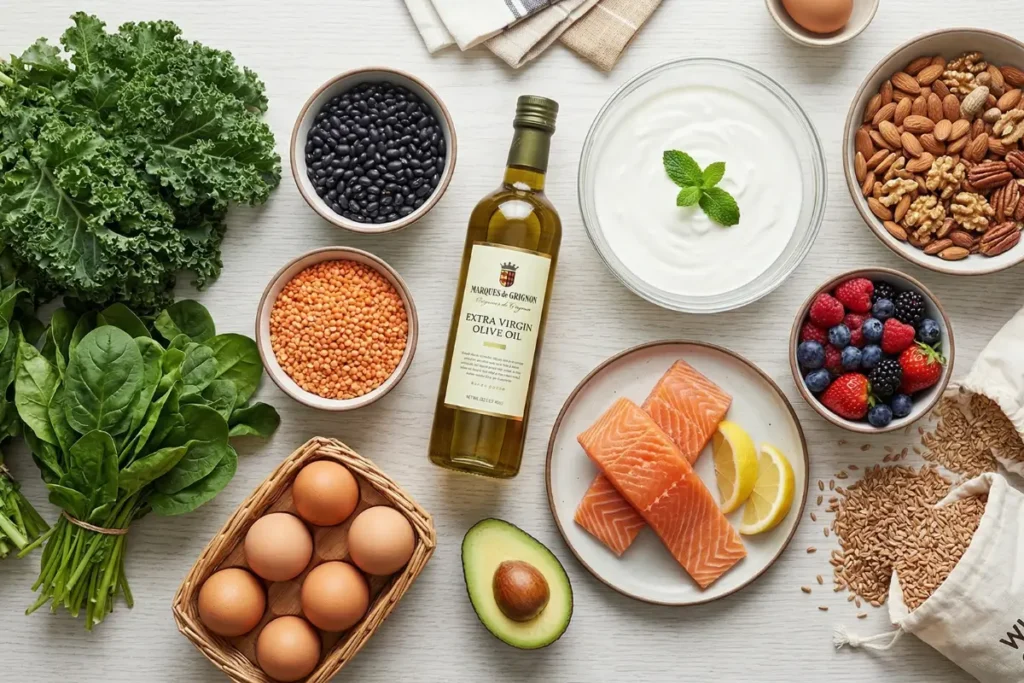
The best foods for menopause-related weight gain are those that support fullness, steady energy, lean mass, and long-term consistency. In practice, that means building meals around protein, vegetables, high-fibre carbohydrates, and healthy fats.
Eating well during the perimenopause and menopause is important and cannot be overlooked.
Proteins That Support Lean Mass
Protein is especially important during midlife because it helps preserve muscle, which supports metabolism, strength, and body composition. The Menopause Society advises women in midlife to aim for about 1.2 grams of protein per kilogram of body weight per day to help preserve muscle mass.
Good Mediterranean-style protein options include:
- Fish such as salmon, sardines, tuna, and trout
- Greek yoghurt or skyr, if tolerated
- Eggs
- Beans, lentils, and chickpeas
- Tofu and tempeh
- Poultry in moderate amounts
This is also a good place to add an expert quote from a registered dietitian explaining why protein is often the missing piece in midlife fat-loss attempts.
Carbs That Work Better
No, you do not need to eliminate carbs during menopause. The better strategy is to choose higher-fibre, less-processed carbohydrates more often.
Helpful options include:
- Oats
- Quinoa
- Brown rice
- Whole-grain bread
- Beans and lentils
- Fruit
- Sweet potatoes
These foods generally provide more fibre and satiety than pastries, sweet drinks, and refined grains. Cleveland Clinic’s Mediterranean-diet guidance emphasises whole grains, legumes, fruits, and vegetables while limiting heavily refined foods.
Fats That Support Satiety
Healthy fats are one reason Mediterranean-style eating feels realistic rather than miserable. Olive oil, nuts, seeds, avocado, and fatty fish provide unsaturated fats, including omega-3s, that help meals feel satisfying while supporting heart health.
The key is not “eat unlimited healthy fat.” The key is to use satisfying fats wisely, especially when weight loss is the goal.
Calcium- and Vitamin-D-Rich Foods Still Matter
Many menopause articles focus only on fat loss, but bone health matters too. Midlife nutrition guidance from menopause organisations also emphasises getting enough calcium and vitamin D, which makes dairy, fortified foods, fish with bones, and other nutrient-rich choices important in a menopause-friendly eating pattern.
That makes Mediterranean-style eating especially helpful because it can support goals beyond weight.
Foods to Limit
You do not need a forbidden-food mindset, but some foods are more likely to lead to overeating and to be associated with cravings, poor sleep, and excess calorie intake. Mediterranean-style eating generally limits refined grains, sugary foods, ultra-processed snacks, and excessive alcohol consumption.
Eat More vs Eat Less
| Eat More | Eat Less |
| Vegetables, beans, lentils, fruit | Sugary snacks and desserts |
| Fish, Greek yoghurt, eggs | Refined grains and pastries |
| Olive oil, nuts, seeds, avocado | Ultra-processed convenience foods |
| Whole grains and high-fibre carbs | Sugary drinks |
| Balanced homemade meals | Alcohol-heavy habits |
Why Red Wine Is Optional, Not Required
Some Mediterranean diet content still presents red wine as part of the lifestyle. That is outdated framing for many readers. Alcohol is optional, and some women find that drinking worsens sleep, hot flashes, appetite control, or next-day food choices. A menopause-friendly Mediterranean pattern should be centred on food quality, not wine.
That balance matters for credibility. A realistic article should say clearly that red wine is not necessary for Mediterranean-diet benefits.
How to Build a Menopause-Friendly Mediterranean Plate
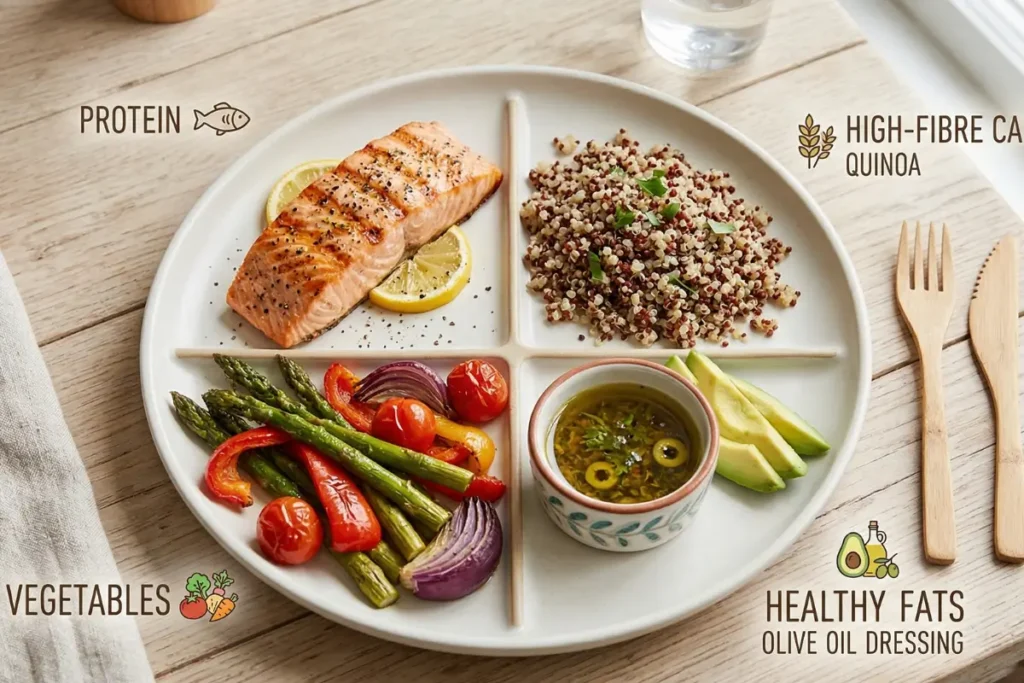
A simple plate method can make this diet easier to follow than calorie-counting alone. For most lunches and dinners, aim for protein, plenty of vegetables, a high-fibre carbohydrate, and a healthy fat. That combination supports fullness and keeps meals nutritionally balanced.
Simple Meal Formula
Use this formula:
1 protein + 2 vegetables + 1 high-fiber carb + 1 healthy fat
Example:
Grilled salmon + roasted broccoli + cucumber-tomato salad + quinoa + olive oil vinaigrette.
That one-line formula is strong for voice search, summaries, and repeatable habit-building.
Sample Day of Eating
Breakfast: Greek yoghurt with berries, chia seeds, walnuts, and a spoon of oats
Lunch: Large salad with chickpeas, tuna, cucumbers, tomatoes, olives, feta, and olive oil dressing
Snack: Apple with almonds
Dinner: Baked salmon, sautéed greens, roasted vegetables, and a small serving of brown rice
Optional evening snack: Plain yoghurt or cottage cheese with cinnamon
This kind of day is practical, satisfying, and much easier to maintain than a restrictive meal plan. It also reflects the pattern described in mainstream Mediterranean-diet guidance.
Portion Control Still Matters
This is one subtopic many articles skip. The Mediterranean diet is healthy, but healthy foods can still be calorie-dense. Olive oil, nuts, cheese, and large-grain portions are nutritious, yet easy to overdo if your goal is fat loss. That does not mean you should avoid them. This means you should use them with due care.
What Results Can You Realistically Expect?

The Mediterranean diet is not a fast-fat-loss diet. It is a sustainable eating pattern that may improve appetite control, energy, waist management, and cardiometabolic health over time. That slower pace is actually part of why it works for many women.
Research suggests that greater adherence to a Mediterranean-style diet is associated with improved weight- and waist-related outcomes in postmenopausal women. Still, results vary and should not be presented as guaranteed.
Timeline for Change
A realistic timeline may look like this:
- 1 to 3 weeks: meals feel more satisfying, cravings may settle, energy may feel steadier
- 4 to 8 weeks: consistency often improves, bloating may decrease, and eating may feel easier
- 8 to 12 weeks and beyond: waist and body-composition changes may become more noticeable, especially with portion awareness and exercise
These are typical ranges, not promises. Sleep, stress, medication use, calorie intake, protein intake, activity level, and underlying health conditions all influence results.
Scale Weight vs Waist Loss
This is one of the most important mindset shifts in menopause. A woman may not lose weight quickly on the scale yet still improve waist circumference, appetite control, strength, and body composition. Since menopause is linked with more central fat distribution, waist changes can sometimes tell a more useful story than body weight alone.
Common Mistakes on the Mediterranean Diet for Menopause
Even a healthy eating pattern can stall if the details are off.
Common mistakes include:
- Overpouring olive oil or overeating nuts because they are “healthy.”
- Eating too little protein
- Forgetting that portions still matter
- Using wine or treats too often
- Ignoring sleep and stress
- Expecting fast results from a long-term pattern
The goal is not perfection. The goal is consistency with enough structure to support results.
This section is also a good place to add a lived-experience line or a mini case example, such as a woman who improved food quality but did not see weight changes until she increased protein and started strength training.
If progress feels slow, understanding how to boost metabolism after 40 can help you set more realistic expectations for weight, appetite, and energy.
Exercise and Lifestyle Support Make the Diet Work Better
Diet works better when it is paired with muscle-preserving movement, better sleep, and stress support. The Menopause Society recommends staying active and getting enough protein, while Mayo Clinic notes that activity helps maintain muscle and support calorie burn.
For most women, the best support plan includes:
- Walking most days
- Resistance training 2 to 4 times per week
- Protein at each meal
- Better sleep hygiene
- Stress management habits
If you have related content, add internal links here using anchor text such as “strength training for women over 40,” “sleep and weight loss,” or “walking plan for menopause.”
Myths vs Facts About Menopause, Weight Gain, and the Mediterranean Diet
Myth: You have to cut carbs to lose menopause weight.
Fact: Most women do better by choosing higher-fibre carbs and controlling portions than by avoiding all carbs.
Myth: Red wine is required on the Mediterranean diet.
Fact: It is optional, and many women sleep and feel better with less alcohol.
Myth: If the scale is slow, the diet is not working.
Fact: Improvements in waist circumference, satiety, and body composition may matter more than rapid scale loss during menopause.
Myth: Healthy foods can be eaten in unlimited amounts.
Fact: Even nutritious foods still contribute to total calorie intake, so portions still matter for fat loss.
Mediterranean Diet and Menopause Weight Gain: Frequently Asked Questions
Yes. The Mediterranean diet may help with menopause-related weight gain by improving satiety, supporting blood sugar control, reducing reliance on ultra-processed foods, and making healthy eating easier to sustain over the long term. It works best when paired with adequate protein intake, regular physical activity, and portion control.
It may help reduce waist size and central fat over time, especially when combined with a calorie-aware approach, strength training, and consistent physical activity. Because menopause is associated with more abdominal fat storage, waist measurements are often more useful than scale weight alone.
The most helpful foods are fish, olive oil, legumes, vegetables, fruit, nuts, seeds, whole grains, and protein-rich foods such as Greek yoghurt, eggs, beans, lentils, tofu, and poultry in moderate amounts.
No. Most women benefit from limiting refined carbohydrates and choosing fibre-rich whole-food carbs such as oats, beans, fruit, lentils, and whole grains.
Appetite, energy, and meal consistency may improve within a few weeks, while visible waist or weight changes often take longer. Results depend on sleep, stress, portion size, protein intake, activity level, and underlying health conditions.
It can fit in moderation, but it is not necessary. Some women find that alcohol worsens sleep, hot flashes, appetite control, or next-day cravings, so skipping it may actually support better results.
It may help some women indirectly by improving overall diet quality and metabolic health, but the evidence is mixed. It is more accurate to say it may support overall menopausal health rather than promise direct symptom relief.
Not always. Many women do well by starting with a plate method and portion awareness. But if fat loss stalls, tracking for a short period can help reveal hidden calories from oils, snacks, cheese, or oversized portions.
Conclusion
The Mediterranean diet for menopause-related weight gain is one of the most practical and evidence-based eating patterns for women seeking improved body composition, steadier energy, and a healthier relationship with food during midlife. It is not a magic fix, but it can support satiety, metabolic health, waist management, and long-term consistency in a way many restrictive diets cannot.
The real goal is not just to lose weight quickly. It is building meals and habits that help you feel strong, look healthier, preserve lean mass, and support your body through hormonal change. If you have a medical condition or symptoms that are affecting appetite, metabolism, or body weight, speak with a clinician or registered dietitian for personalised guidance.
Ready to make this easier? Start with a 7-day Mediterranean menopause starter plan built around protein, vegetables, fibre-rich carbs, and healthy fats. Then pair it with walking, strength training, and better sleep habits so your plan supports not just weight loss, but lasting midlife health.