
Many women notice something frustrating in their early 40s: the same diet and lifestyle that worked for years suddenly stops working. The scale creeps upward, belly fat becomes harder to lose, and energy levels shift.
This is menopause weight gain after 40, and it is incredibly common.
Hormonal changes, slower metabolism, muscle loss, sleep disruption, and stress all converge during midlife. Together, these shifts make the body more likely to store fat — particularly around the abdomen.
The good news? This process is not inevitable or irreversible. With the right strategies, many women successfully stabilise their weight and improve metabolic health during menopause.
What Causes Menopause Weight Gain After 40?
Menopause weight gain after 40 occurs primarily due to hormonal changes, including declining estrogen levels, muscle loss, slower metabolism, insulin resistance, sleep disruption, and elevated stress hormones like cortisol. These changes shift fat storage toward the abdomen, making weight management more challenging during midlife.
Table of Contents
In This Guide
• What happens to your body after 40
• Why menopause causes weight gain
• Hormones and belly fat
• Nutrition strategies for menopause weight loss
• Best exercises for women over 40
• Supplements that may support metabolism
• Frequently asked questions
What Really Happens to Your Body After 40 and Why Menopause andWeight Gain Increase
If you feel like your body has suddenly changed after turning 40, you are not imagining it.
During the menopausal transition, several physiological changes occur:
• Estrogen levels begin to decline
• Muscle mass gradually decreases
• Metabolism slows
• Fat storage shifts toward the abdomen
Research suggests women gain around 1–1.5 pounds per year during midlife without lifestyle adjustments.
But the biggest shift isn’t just weight — it’s fat distribution.
Instead of accumulating around the hips and thighs, fat begins storing around the abdomen as visceral fat, which increases the risk of:
• heart disease
• type 2 diabetes
• metabolic syndrome
Understanding these body changes is the first step toward managing them effectively.
Why Weight Gain Is Common During Menopause
A combination of biological and lifestyle factors.
| Cause | Impact on Weight |
|---|---|
| Estrogen decline | Fat shifts toward the abdomen |
| Muscle loss | Reduced metabolic rate |
| Sleep disruption | Increased hunger hormones |
| Stress hormones | Increased belly fat storage |
| Insulin resistance | Higher fat storage |
The Role of Estrogen and Insulin Resistance
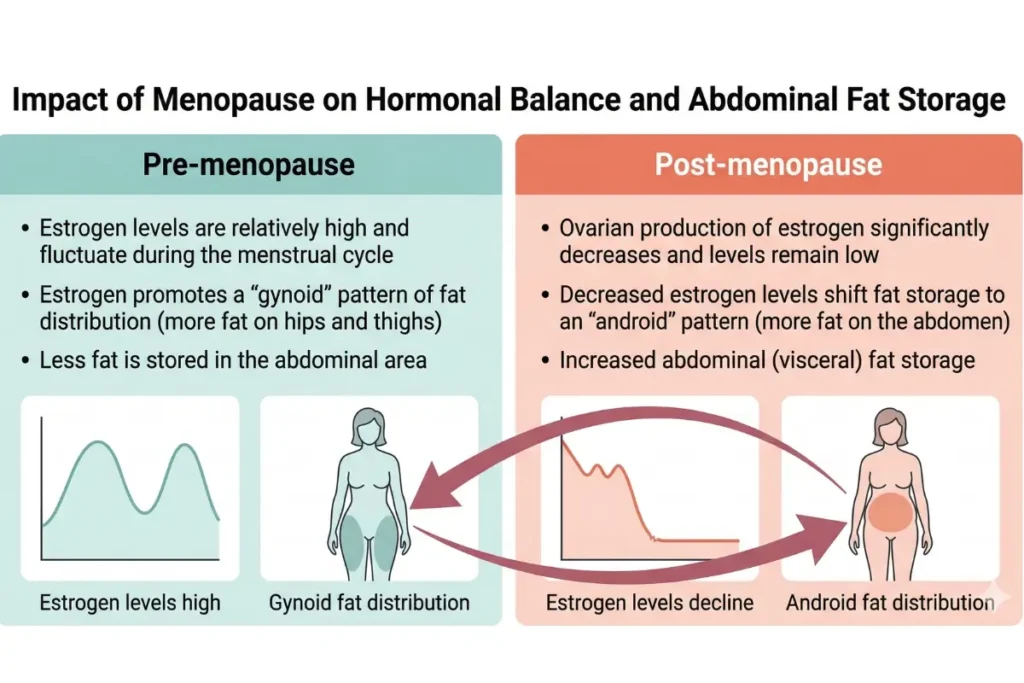
Estrogen plays a major role in regulating body fat.
Before menopause, estrogen encourages fat storage around the hips and thighs. As estrogen declines, fat distribution shifts toward the abdomen — creating what many women call menopause belly fat.
Lower estrogen levels also increase the risk of insulin resistance, meaning the body becomes less efficient at processing glucose.
This can lead to:
• higher blood sugar levels
• increased fat storage
• stronger cravings
As estrogen levels decline during menopause, fat distribution often shifts toward the abdomen, leading to what many women describe as stubborn menopause belly fat. If you want a deeper strategy for addressing this, read our guide on how to lose belly fat after 40.
Muscle Loss and Metabolic Slowdown
Another major factor in menopause weight gain is loss of muscle mass.
Starting in the 30s, women lose approximately 3–8% of muscle mass per decade, a condition called sarcopenia.
Because muscle burns more calories than fat, losing muscle reduces the number of calories your body burns at rest.
This means:
• metabolism slows
• fat gain becomes easier
• weight loss becomes harder
Strength training and adequate protein intake are essential for maintaining muscle mass and metabolic health.
Health Risks, BMI, and Lifestyle Habits During Menopause
Weight gain during menopause is not only a cosmetic concern. For many menopausal women, changes in body weight and fat distribution can increase the likelihood of developing several long-term health risks, particularly when excess fat accumulates around the abdomen.
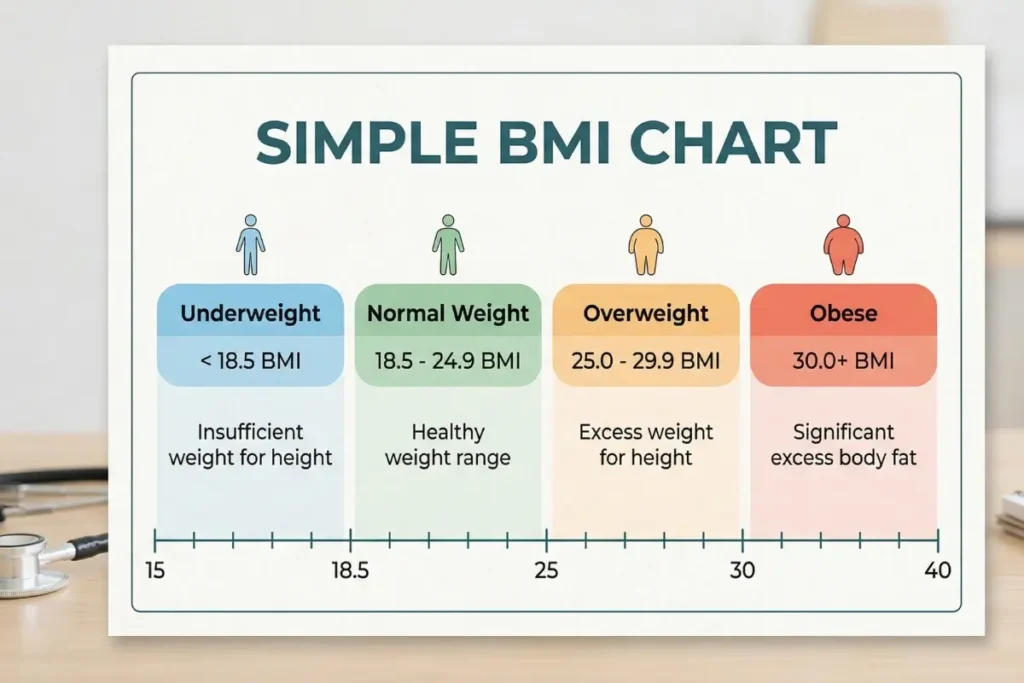
Healthcare professionals often use Body Mass Index (BMI) as a simple screening tool to evaluate whether a person’s body weight falls within a healthy range. BMI compares weight and height to categorise individuals as underweight, normal weight, overweight, or obese.
Although BMI does not directly measure body fat percentage, it remains a useful indicator for identifying potential health problems associated with menopause weight gain.
BMI Categories for Adults
| BMI Range | Weight Category |
|---|---|
| Below 18.5 | Underweight |
| 18.5 – 24.9 | Normal weight |
| 25 – 29.9 | Overweight |
| 30 or higher | Obese |
Women who fall into the overweight or obese BMI categories may face higher health risks, including cardiovascular disease, insulin resistance, and type 2 diabetes. These conditions become more common during midlife as hormonal changes affect metabolism and fat storage.
Beyond physical changes, menopause can also influence emotional well-being. Hormonal fluctuations often contribute to mood swings, fatigue, and irritability, which can make maintaining healthy routines more challenging.
One of the most effective strategies for managing menopause weight gain and reducing long-term health risks is adopting a balanced approach that combines diet and exercise.
A healthy eating pattern should emphasise whole foods such as fruits and vegetables, lean proteins, whole grains, and healthy fats like olive oil, nuts, seeds, and fatty fish. These foods support heart health, improve metabolic function, and help regulate appetite.
At the same time, regular exercise plays a critical role in maintaining a healthy body weight and preventing chronic health problems. Physical activity improves insulin sensitivity, preserves muscle mass, and supports overall well-being.
Even moderate activities can make a meaningful difference. For example, brisk walking for about 30 minutes a day has been shown to improve cardiovascular fitness, reduce abdominal fat, and support healthy weight management in menopausal women.
When diet and exercise are combined with adequate sleep and stress management, they form the foundation for reducing the long-term health risks associated with menopause weight gain.
Sleep, Stress, and Cortisol
Sleep disruption is extremely common during menopause.
Hot flashes, night sweats, and anxiety can interfere with sleep quality, which directly impacts metabolism.
Poor sleep causes:
• increased hunger hormone ghrelin
• reduced satiety hormone leptin
• stronger cravings for sugar and processed foods
At the same time, chronic stress increases cortisol, the body’s primary stress hormone.
Elevated cortisol encourages the body to store fat — particularly around the abdomen.
To learn more about this relationship, read our article on Cortisol and Weight Gain in Women Over 40.
How to Stop Menopause Weight Gain After 40
Watch: Expert Advice on Menopause Weight Gain
There is no single magic solution.
The most effective menopause weight loss strategies combine:
• balanced nutrition
• strength training
• regular movement
• quality sleep
• stress management
Together, these habits help restore metabolic balance.
Nutrition Strategies for Hormonal Balance

The best diet for menopause weight loss is not extreme dieting.
Research consistently supports a Mediterranean-style diet, which emphasises whole foods and balanced nutrition.
Key principles include:
Prioritize Protein
Aim for 25–30 grams of protein per meal to support muscle preservation and appetite control.
Increase Fiber
Fibre supports gut health and stabilises blood sugar.
Recommended intake: 25–35 grams per day.
Limit Ultra-Processed Foods
Highly processed foods worsen insulin resistance and inflammation.
Focus on Anti-Inflammatory Foods
Examples include:
• fatty fish
• olive oil
• leafy greens
• berries
• nuts and seeds
Building a hormone-friendly eating routine is one of the most powerful tools for managing menopause weight gain. Our complete diet plan for women over 40 explains how to structure meals for metabolism and hormone balance. You can also explore our full diet and nutrition guide for women over 40 to learn how balanced meals, healthy fats, and fiber-rich foods support metabolism and hormone health.
Strength Training for Midlife Women

Strength training is one of the most powerful tools for combating menopause weight gain.
Benefits include:
• increased muscle mass
• improved insulin sensitivity
• stronger bones
• higher resting metabolism
Recommended exercise routine:
Exercise TypeFrequencyStrength training2–3 days per weekCardio2–3 days per weekYoga or recovery1–2 days per week
Even bodyweight training or resistance bands can produce meaningful results.
For a complete workout strategy, see our guide on Exercise and Fitness for Women Over 40.
Best Supplements for Menopause Weight Gain
While lifestyle changes are the foundation of healthy weight management, some supplements may support metabolism and hormonal balance.
| Supplement | Benefit | Rating |
|---|---|---|
| Mitolyn | Supports metabolism and fat burning | ⭐⭐⭐⭐⭐ |
| Transparent Labs Protein | Helps preserve lean muscle mass | ⭐⭐⭐⭐ |
| Omega-3 Fish Oil | Reduces inflammation and supports hormone health | ⭐⭐⭐⭐ |
Always consult a healthcare professional before starting any supplement routine.
Emotional and Mental Impact of Midlife Weight Changes
Weight gain during menopause is not only physical — it can also affect emotional well-being.
Many women experience:
• frustration
• reduced confidence
• body image concerns
Menopause is a major biological transition, and it deserves compassion rather than self-criticism.
Mental health support, social connection, and positive self-care practices can play an important role in navigating this life stage.
Realistic Timeline for Weight Loss
Sustainable fat loss during menopause is slower than many diet programs promise.
Healthy weight loss typically occurs at:
0.5–1 pound per week
Tracking progress beyond the scale is helpful.
Important indicators include:
• waist circumference
• strength gains
• improved sleep
• increased energy levels
• better clothing fit
These markers often improve before noticeable scale changes.
Frequently Asked Questions
Hormonal changes, muscle loss, and slower metabolism reduce calorie expenditure, making fat gain more likely even without dietary changes.
Yes. Strength training, balanced nutrition, improved sleep, and stress management can reduce visceral fat over time.
HRT is not a weight-loss treatment but may indirectly support healthy habits by improving sleep, mood, and energy.
A combination of resistance training and cardiovascular exercise is most effective.
Many women gain around 5 pounds during the menopausal transition, though experiences vary.
People Also Ask
Why am I gaining weight during menopause, even if I eat the same amount?
Hormonal changes reduce metabolism and increase fat storage, particularly around the abdomen.
At what age does menopause-related weight gain start?
Many women begin experiencing metabolic changes during perimenopause in their early to mid-40s.
What hormone causes belly fat during menopause?
Declining estrogen and elevated cortisol contribute most strongly to menopause belly fat.
Can walking help reduce menopause weight gain?
Yes. Walking improves insulin sensitivity, burns calories, and reduces stress hormones.
Scientific References and Expert Sources
Research on menopause and weight gain has been conducted by several major medical institutions, including:
• National Institutes of Health (NIH)
Research from the National Institutes of Health (NIH) shows that menopause is associated with changes in fat distribution and metabolic health.
• Mayo Clinic (According to the Mayo Clinic, hormonal shifts during menopause often lead to increased abdominal fat and metabolic changes.)
• Harvard Medical School
Experts from Harvard Medical School also emphasise the importance of strength training and balanced nutrition for maintaining metabolic health after menopause.
• North American Menopause Society
• Endocrine Society
These organisations confirm that hormonal changes, metabolic slowdown, muscle loss, and lifestyle factors all contribute to weight gain during menopause.
Summary — Take Control of Menopause Weight and Feel Strong Again
Menopause weight gain after 40 is driven by predictable biological changes:
• declining estrogen
• muscle loss
• metabolic slowdown
• insulin resistance
• sleep disruption
• elevated cortisol
But weight gain is not inevitable.
By focusing on:
• protein-rich nutrition
• strength training
• quality sleep
• stress management
• medical guidance when needed
Women can maintain metabolic health and thrive through midlife.
Menopause is not the end of vitality — it is simply a transition. With the right approach, women can feel strong, energetic, and confident well beyond 40.