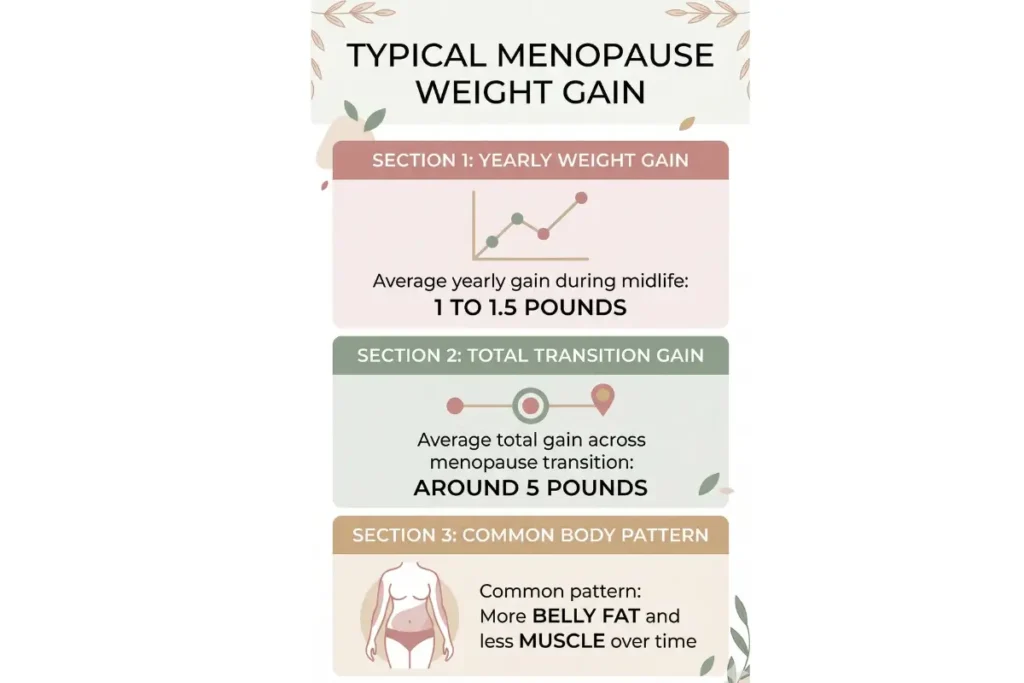
If you’ve been asking, “How much weight do you gain during menopause?” the honest answer is this. There is no single number for everyone, but research suggests many women gain about 1 to 1.5 pounds per year during midlife. The average total gain across the menopause transition is often around 5 pounds.

That said, the number on the scale is only part of the story.
For many women, menopause also changes where fat is stored. Even if your weight only goes up a little, you may notice more fat around your middle, less muscle, and a different body shape. That’s why menopause weight gain can feel bigger than the actual pounds suggest.
The good news is that some weight gain during menopause is common, but there are still practical things you can do to manage it. In this guide, we’ll break down what’s normal, why it happens, and what you can do to prevent menopause weight gain or lose weight after menopause.
What Is the Average Weight Gain During Menopause?
The best short answer is that many women gain around 5 pounds across the menopause transition.
Research also commonly reports an average weight gain of about 1 to 1.5 pounds per year during midlife. Some women gain very little. Others gain 10 pounds or more over time.
So, what’s considered typical menopause weight gain in pounds?
A helpful way to think about it is this:
- Average total gain during the menopause transition: around 5 pounds
- Average yearly gain in midlife: about 1 to 1.5 pounds
- Common pattern: more fat around the waist and less muscle over time
This is why two women can gain the same amount of weight but look and feel very different. One may notice only a small change, while another may feel like her whole body shape has shifted.
Why Does Menopause Cause Weight Gain?
Want a doctor-led breakdown? Watch this expert discussion on menopause and weight gain from The Menopause Society.
Alright, guys, this is where things get frustrating.
A lot of women blame menopause hormones alone, but the truth is a little more layered. Menopause weight gain usually happens because of a mix of hormone changes, ageing, muscle loss, sleep problems, stress, and lower activity levels.
Here’s what’s going on.
Lower estrogen can shift fat to the belly.
As estrogen levels drop, the body becomes more likely to store fat around the abdomen instead of the hips and thighs. This is one reason menopause belly fat is so common.
Even if your overall weight has not changed dramatically, your waistline may still look different.
Muscle mass naturally declines with age.
Muscle plays a big role in metabolism. The more muscle you have, the more calories your body burns at rest.
As women age, muscle mass tends to decline unless they actively work to keep it. That makes it easier to gain weight over time, especially if eating habits stay the same but daily movement drops.
Sleep problems make weight harder to manage.
Poor sleep can affect hunger, energy, cravings, and motivation.
If you’re waking up from hot flashes, night sweats, or general sleep disruption, it becomes much harder to stay active and make healthy food choices during the day.
Stress and busy midlife routines add up.
Hey y’all, this part matters more than people think.
Many women in their 40s and 50s are juggling work, family, ageing parents, and a dozen daily responsibilities. That kind of stress can lead to less exercise, more emotional eating, and less time to care for yourself.
Menopause may be the tipping point, but real life is often part of the weight gain story too.
How Hormone Levels, Insulin Resistance, and Visceral Fat Fit In
Here’s another piece of the puzzle.
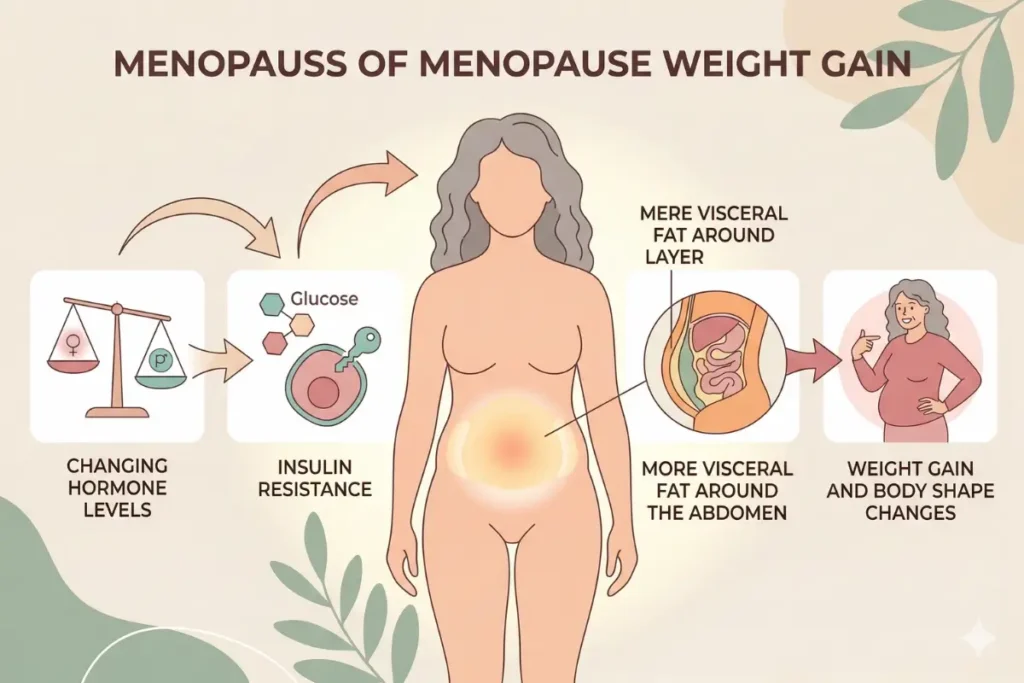
During menopause, changing hormone levels can affect the way your body stores fat and uses energy. For some women, these shifts may also increase insulin resistance, which means the body does not respond to insulin as well as it used to. That can make it easier to store fat, especially around the belly.
This is one reason menopause often comes with more visceral fat, which is the deeper fat stored around internal organs. Unlike the fat you can pinch under the skin, visceral fat is more closely linked with certain health risks, including heart disease and blood sugar problems.
You may also hear people talk about body mass index BMI when discussing menopause and weight gain. BMI can be one tool, but it does not tell the full story. A woman can have a “normal” BMI and still notice an increase in belly fat or muscle loss. That’s why waist size, strength, energy, and overall health matter too.
In other words, menopause is not just about gaining pounds. It is about body changes happening under the surface that may be leading to weight gain or changing the way weight is distributed.
Perimenopause Weight Gain vs. Postmenopause Weight Gain
Weight changes often begin in perimenopause, not just after menopause.
Perimenopause is the stage leading up to menopause when hormones start shifting and periods become irregular. This is when many women first notice stubborn weight gain, especially around the middle.
Postmenopause is the stage after you’ve gone 12 months without a period. By this point, some of the changes in fat distribution and muscle loss may continue, even if body weight itself starts to level off more.
In simple terms, you may start noticing body changes in perimenopause, and those changes can continue for a while after your final period.
That’s why so many women say, “I’m doing the same things I’ve always done, but my body looks completely different.”
Is Menopause Belly Fat Normal?
Yes, it is very common.
Menopause belly fat is one of the most talked-about symptoms of this stage of life. That’s because hormonal changes can shift the body toward storing more fat in the abdominal area.
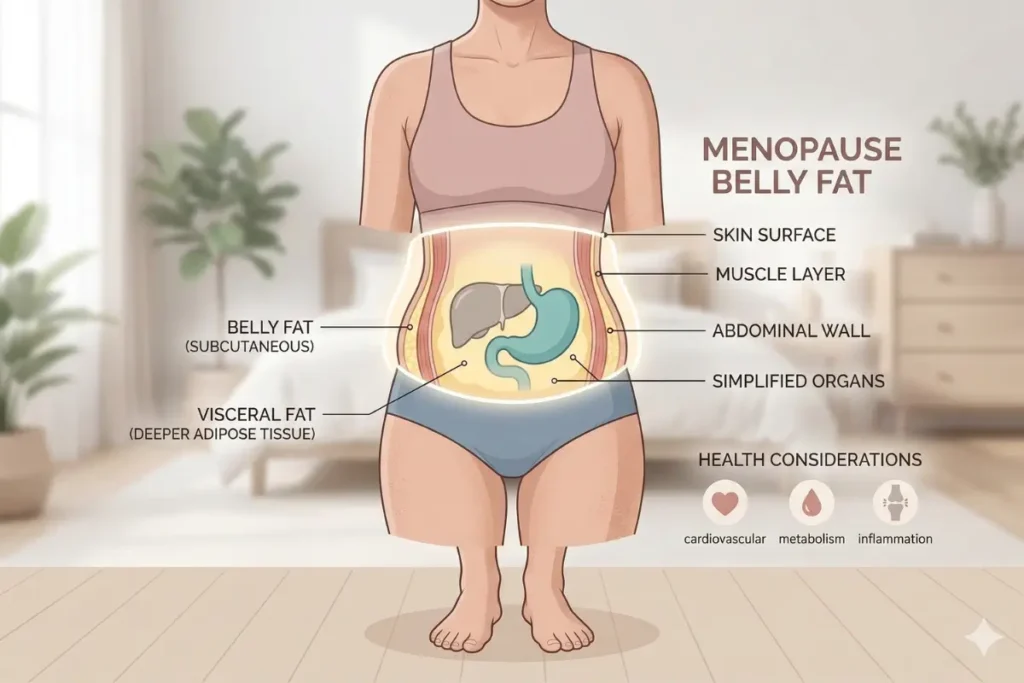
Much of this extra belly weight may include more visceral fat, which is one reason experts pay close attention to menopause-related body changes.
But here’s the important thing: common does not always mean harmless.
Fat around the middle is more closely linked with heart disease, blood sugar problems, and metabolic issues than fat stored in other areas of the body. So while belly fat during menopause is normal, it is still worth paying attention to.
This is also why weight management during menopause is not only about appearance. It is about protecting your long-term health, strength, and energy.
How Much Weight Do You Gain During Menopause if You’re Doing Everything Right?
Sometimes, still a little.
That can be hard to hear, but it’s also honest.
Healthy habits during menopause do not always mean your weight will stay the same. In many cases, those habits help you gain less weight, keep more muscle, reduce waist gain, and feel better overall.
Think of it like walking uphill with a backpack. You can still move forward, but it takes more effort than it used to.
That does not mean your habits are not working. It means your body is going through a real transition, and realistic expectations matter.
How to Prevent Menopause Weight Gain

There is no magic fix, but there are a few habits that can make a real difference.
1. Prioritise strength training
Strength training is one of the best things you can do during menopause.
It helps preserve muscle, supports metabolism, improves body composition, and can make everyday life feel easier, too. You do not need to become a bodybuilder. Simple strength workouts done consistently can help.
A few great options include:
- Dumbbell workouts
- Resistance band training
- Bodyweight exercises
- Strength-based Pilates
- Machine workouts at the gym

Even two or three sessions a week can be a strong start.
2. Move your body more often
Daily movement matters.
Walking, swimming, biking, dancing, and other forms of moderate activity help support calorie burn, heart health, and mood. This does not have to be extreme to work. In fact, the women who do best long-term are often the ones who build simple movement into everyday life.
3. Eat more protein and fibre
Protein helps support muscle and keeps you fuller for longer. Fibre also helps with fullness, digestion, and blood sugar balance.
A good menopause-friendly meal often includes:
- A source of protein
- Vegetables or fruit
- Whole grains or beans
- Healthy fats
This kind of meal pattern is usually more effective than crash dieting because it gives your body what it actually needs.
4. Improve sleep where you can
Sleep affects nearly everything, including appetite, cravings, and energy.
If menopause symptoms are hurting your sleep, it may help to talk with your doctor about ways to manage hot flashes, night sweats, or insomnia. Better sleep can make healthy habits feel much more doable.
5. Cut back on small daily extras
Menopause weight gain is often gradual, which means it can come from small habits repeated over time.
Things like sugary drinks, frequent snacking, alcohol, and oversized portions can add up faster than most people realise. You do not need a perfect diet, but being more aware of these little extras can help.
What Actually Helps With Maintaining a Healthy Weight During Menopause
Alright, guys, this is where the advice needs to stay simple and real.
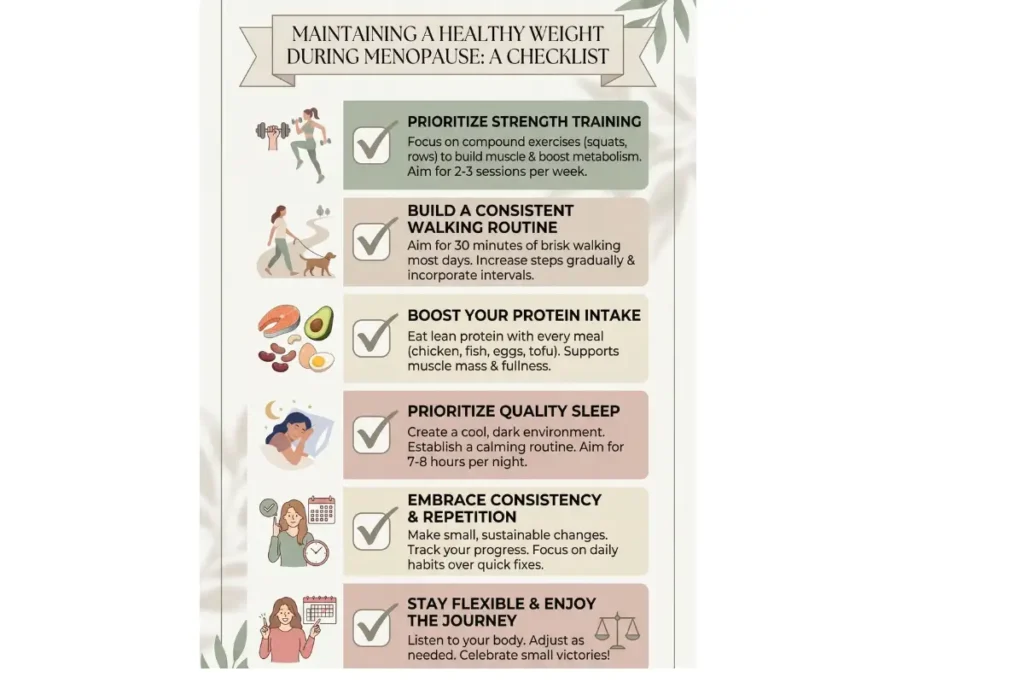
When it comes to maintaining a healthy weight during menopause, the goal is not perfection. The goal is consistency. A mix of diet and exercise usually works better than extreme plans that are hard to stick with.
Start with a balanced diet built around protein, fibre, healthy fats, fruits, vegetables, and whole-food carbs. Then pair that with regular movement and strength training. This combination supports muscle, energy, blood sugar balance, and long-term weight management.
It’s also important to remember that weight gain is not always just about menopause. Sometimes, an underlying medical condition like thyroid problems, poor sleep, or medication side effects may be part of the picture. Stress and mental health matter too, because low mood, anxiety, and burnout can all affect eating habits, sleep, and motivation.
Some women also ask whether hormone replacement therapies can help. These therapies are not meant as weight-loss treatments, but in some cases, they may help relieve menopause symptoms that make healthy routines easier to maintain, like poor sleep or frequent hot flashes.
The biggest takeaway? Supporting your body with simple habits is usually more effective than fighting it with restriction.
Can You Lose Weight After Menopause?
Yes, you can lose weight after menopause.
But for most women, it works better to focus on fat loss, muscle retention, strength, and waist size rather than obsessing over quick drops on the scale.
The most effective plan usually includes:
- Strength training
- Regular walking or cardio
- Enough protein
- A sustainable calorie deficit
- Better sleep
- Stress support
- Patience and consistency
Hormone therapy is not a weight-loss treatment, but for some women, it may help with symptoms that make healthy habits easier to maintain.
For many women, the focus is less about chasing a perfect body mass index BMI score and more about improving strength, waist size, energy, and overall health.
The big takeaway here is that weight loss after menopause is possible, but it usually works best when you stop chasing quick fixes and start building a routine your body can actually sustain.
When Weight Gain During Menopause May Be Worth Discussing With a Doctor
A slow increase over time can be normal during menopause. But it’s a good idea to check in with a doctor if you notice:
- Rapid or unexplained weight gain
- Extreme fatigue
- Swelling
- Major sleep problems
- Signs of thyroid issues
- Depression or binge eating
- Rising blood pressure, blood sugar, or cholesterol
Not every change in weight during midlife is just menopause. Other health conditions, medications, or hormone issues may be part of the picture.
That’s especially true if you think a medical condition, medication change, sleep problem, or mental health struggle may be playing a role.
What to Focus On Instead of Just the Scale
One of the best mindset shifts during menopause is to stop using the scale as your only measure of progress.
Instead, ask yourself:
- Am I getting stronger?
- Is my waist measurement improving?
- Am I sleeping better?
- Do I have more energy?
- Are my habits sustainable?
That approach is more realistic and often more helpful than chasing a certain number.
A Simple Action Plan to Manage Menopause Weight Gain
Alright, guys, here’s the practical part.
For the next two weeks, try this:
Start with two or three strength workouts each week.
Walk most days, even if it’s only for 20 to 30 minutes.
Build your meals around protein and fibre.
Reduce the easiest calorie leaks, like sugary drinks or mindless snacking.
Track your waist size, energy, sleep, and strength along with your weight.
That is a much stronger starting point than panic dieting or assuming your body is broken.
FAQs
Many women gain around 5 pounds during the menopause transition, though yearly weight gain in midlife is often closer to 1 to 1.5 pounds. Some women gain less, while others gain more.
Menopause weight gain is usually caused by a mix of lower estrogen, ageing, muscle loss, sleep disruption, stress, lifestyle changes, shifting hormone levels, and sometimes insulin resistance.
Yes, menopause belly fat is very common. Hormonal changes can shift fat storage toward the waist, even if total body weight does not change much. In many cases, that can also mean more visceral fat around the midsection.
You may not prevent every pound, but strength training, regular movement, enough protein, better sleep, a balanced diet, and steady diet and exercise habits can help reduce weight gain and improve body composition.
Yes. Weight loss after menopause is possible, especially with a sustainable plan focused on muscle retention, activity, nutrition, consistency, and maintaining a healthy weight over time instead of chasing quick fixes.
Final Thoughts
If you’re noticing weight gain during menopause, you are not alone, and you are not doing anything wrong.
For many women, the average weight gain during menopause is modest on paper. But because the body often stores more fat around the middle and loses muscle over time, those changes can feel much bigger in real life.
The good news is that there are clear, practical ways to support your body during this stage. Strength training, daily movement, protein-rich meals, better sleep, and realistic expectations can all make a meaningful difference.
You do not need to punish yourself. You need a plan that works with your body, not against it.
If you’re ready to take the next step, download our free Menopause Weight Gain Tracker and start building simple habits that help you feel stronger, healthier, and more in control.