By Victoria David
If you have ever thought, “Why is this so much harder now than it used to be?” you are not alone.
Weight loss after 40 often feels different. Not impossible. Not hopeless. Just… harder.
And the numbers back that up.
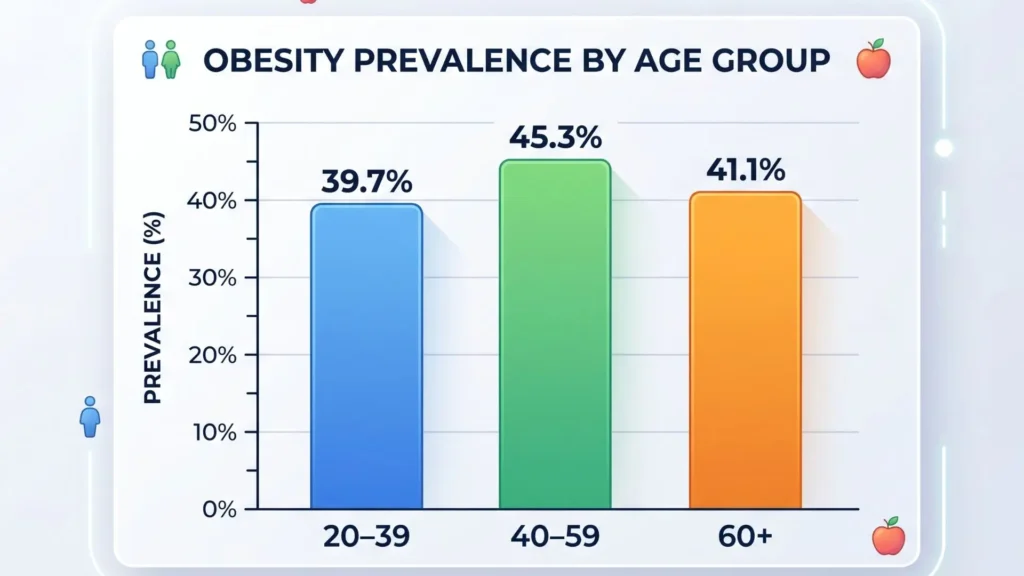
In recent CDC data, adults ages 40 to 59 had the highest obesity prevalence of any adult age group in the United States, at 46.4%. Overall, adult obesity prevalence was 40.3%, and severe obesity was higher in women than in men overall, with 12.1% in women versus 6.7% in men.
So, first, let’s clear something up.
If your body feels different in midlife, that is not a personal failure. It is a measurable health pattern shaped by aging, body composition, hormones, sleep, stress, and modern lifestyle.
This guide breaks down the most useful weight-loss statistics for women over 40 in plain English, and then explains what they actually mean for your real life.
Quick Answer
Women over 40 face a real, data-backed increase in weight-management difficulty. U.S. adults ages 40 to 59 have the highest obesity prevalence at 46.4%, and among people trying to lose weight, only 28.2% achieve at least a 5% weight loss, while only 12.9% achieve at least a 10% loss over the past year. The challenge is not usually a sudden “metabolism crash.” More often, it is a mix of muscle loss, lower daily energy use, menopause-related fat redistribution, sleep disruption, stress, and changing calorie needs.
Women Over 40 Weight Loss Statistics at a Glance
| Statistic | What It Shows |
| 40.3% | Overall adult obesity prevalence in the U.S. during August 2021–August 2023 |
| 46.4% | Obesity prevalence in adults aged 40–59 is the highest in the adult age group |
| 12.1% | Severe obesity prevalence in women overall |
| 6.7% | Severe obesity prevalence in men overall |
| 47.4% | Share of people reporting a weight-loss attempt in NHANES 2021–2023 |
| 28.2% | Among those trying, share who lost at least 5% of body weight |
| 12.9% | Among those trying, share who lost at least 10% of body weight |
| 150 minutes | Weekly moderate activity, adults should aim for |
| 2 days | Weekly muscle-strengthening goal for adults |
| 20–60 years | Age span where metabolism stayed broadly stable in a major 2021 lifespan study |
Sources: CDC, NHANES analysis, CDC activity guidance, and the 2021 Science energy expenditure study.
1) Midlife Really Is the Hardest Weight-Loss Window for Many Women
The first big takeaway is simple: midlife is not your imagination.
According to the CDC, adults ages 40 to 59 had the highest obesity prevalence in the country at 46.4%. That was higher than adults ages 20 to 39, who were at 35.5%, and also higher than adults 60 and older, who were at 38.9%.
That matters because it tells us this is not just an individual struggle. It is a broad population pattern.
Even more important, severe obesity was significantly higher in women than in men overall. That is one reason women’s midlife weight changes deserve their own discussion instead of being lumped into generic weight-loss advice.
What this means for women over 40:
If weight loss feels harder now, you are dealing with a well-documented midlife pattern, not a lack of effort or discipline.
2) The Problem Is Not Just “More Weight” — It Is Also Where Fat Goes
This is where many women feel confused.
Sometimes the scale does go up. However, sometimes the bigger change is where fat is stored.
Mayo Clinic’s clinician review explains that midlife women may gain up to about 0.7 kg per year and tend to shift from a more lower-body fat pattern to a more central, abdominal pattern. That change in body-fat distribution is strongly linked with menopause, even when overall weight gain is more closely tied to aging itself.
So, yes, the number on the scale matters. Still, belly-centred fat gain often matters more for health.
That is one reason many women say, “I weigh almost the same, but my waist is bigger.”
For a deeper look at that exact phase, read Menopause Weight Gain After 40.
What this means for women over 40:
The story is often not just about weight gain. Instead, it is a shift toward more abdominal fat, which can affect both confidence and long-term health.
3) Your Metabolism Probably Did Not “Crash” at 40
This surprises a lot of people.
A major 2021 Science study looked at energy expenditure across the human lifespan and found that, after adjusting for body composition, metabolism stayed broadly stable from about age 20 to age 60.
That does not mean your body feels the same at 45 as it did at 25.
It means the explanation is more nuanced.
Your cells are not necessarily burning fewer calories dramatically simply because you turned 40. Instead, what often changes is:
- How much muscle do you carry
- How much do you move throughout the day
- How well you sleep
- How your hormones affect body-fat distribution
- how your appetite and recovery respond to stress
So the feeling of a “slower metabolism” can be real in daily life, even if the deeper cause is more about body composition and routine than a sudden metabolic shutdown.
If you want a related read on this, here is my guide on how to boost metabolism after 40.
What this means for women over 40:
Your body likely needs a different strategy now, not shame. Midlife weight loss is less about a broken metabolism and more about changing body composition, recovery, and daily habits.
4) Muscle Loss Quietly Changes the Math
This is one of the most overlooked parts of midlife weight gain.
As women age, lean mass tends to decline, while body fat often rises. Mayo Clinic specifically points to a decrease in lean body mass and physical activity as major reasons aging leads to weight gain.
Why does that matter so much?
Because muscle is a metabolically active tissue. In plain English, muscle helps keep your daily energy needs higher. So, if you gradually lose muscle and do not replace it with resistance training, your body may need fewer calories than it used to.
That means a way of eating that once maintained your weight can slowly become a surplus.
A study of women ages 40 to 50 found that women who increased physical activity over two years had the smallest increases in weight and even a slight decrease in waist circumference. Meanwhile, women who reduced activity gained the most weight and waist size.
What this means for women over 40:
Protecting muscle is not optional anymore. It becomes part of the foundation of weight control, strength, and healthy aging.
5) Many Women Try to Lose Weight. Many Fewer Get Big Results.
Now let’s talk about something that feels painfully familiar.
Trying is common. Big success is less common.
A 2026 analysis of NHANES 2021–2023 found that 47.4% of participants reported trying to lose weight in the past year. However, among those trying, only 28.2% achieved at least a 5% weight loss, and only 12.9% achieved at least a 10% loss. Middle-aged adults aged 40 to 59 had the highest prevalence of trying to lose weight at 51.6%. Women also had higher odds of attempting weight loss than men.
That does not mean effort is useless.
It means real-world weight loss is hard, especially when life is busy, sleep is disrupted, muscle is declining, and standard advice is too simplistic.
What this means for women over 40:
If you have tried repeatedly and felt stuck, that experience is common. You are not the only one working hard without seeing dramatic results.
6) Exercise Still Matters — But the Mix Matters More Now
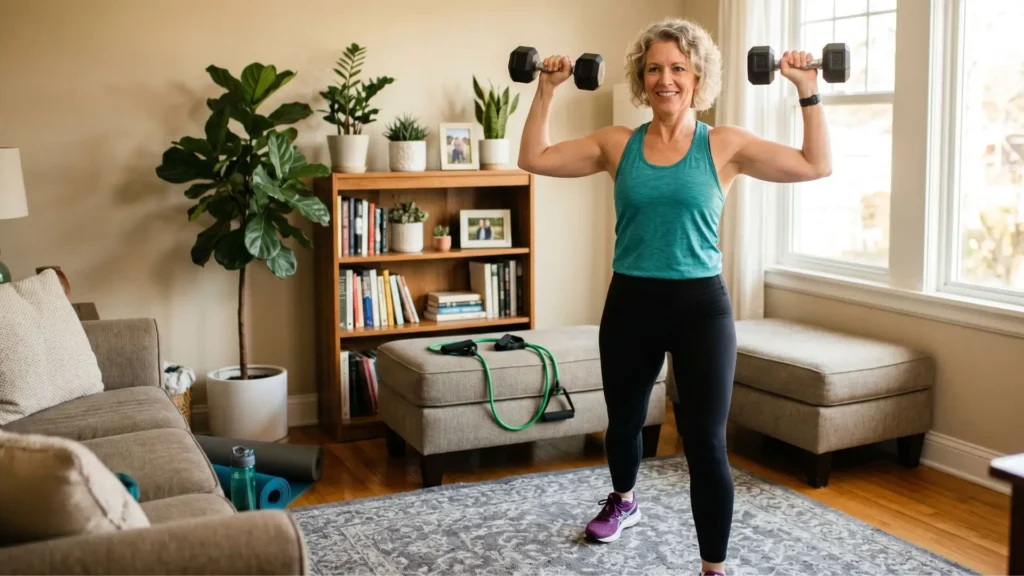
The CDC guidance for adults is still clear: aim for at least 150 minutes of moderate-intensity physical activity per week and at least 2 days of muscle-strengthening activity each week.
However, for women over 40, the old “just do more cardio” advice is often incomplete.
Mayo Clinic’s clinician guidance specifically highlights resistance exercise as helpful for preventing muscle loss and the drop in energy expenditure related to aging. It may also support bone health and musculoskeletal symptoms during the menopausal transition.
So, instead of thinking in extremes, think in layers:
- walking for consistency
- Strength training for the muscles
- mobility for joints
- some cardio for heart health
- enough recovery so stress does not pile up
What this means for women over 40:
Cardio still helps. Walking still counts. But strength training becomes especially important because it helps protect the muscles your body is slowly trying to lose.
7) Nutrition Has to Get Smarter, Not Just Smaller
This is where many women get frustrated.
Eating less and less is not always the answer.
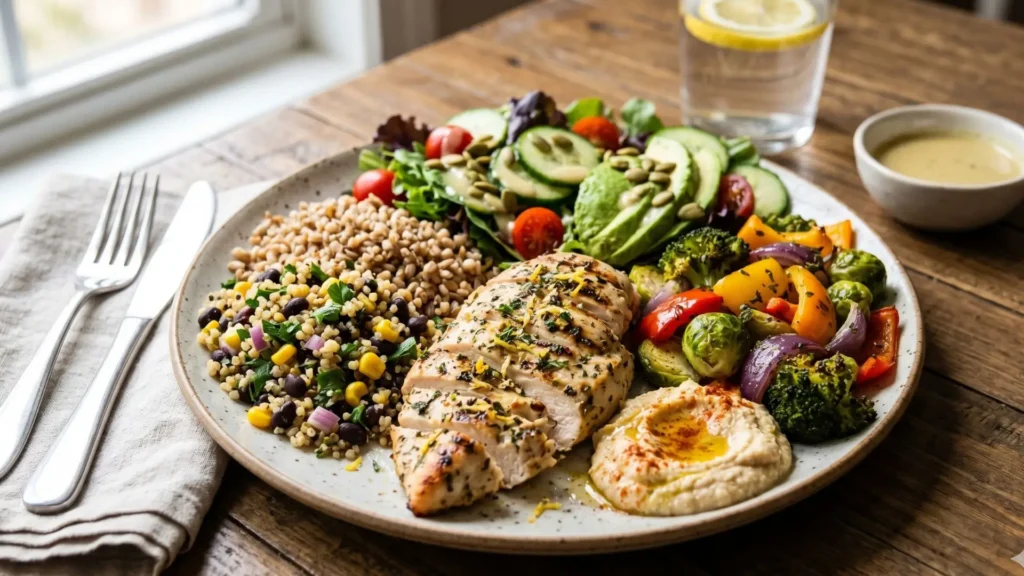
In fact, if you cut calories too hard without protecting protein and strength training, you risk making the muscle-loss problem worse. That can leave you lighter on the scale but weaker, hungrier, and harder to maintain.
Mayo Clinic’s clinician review recommends a structured approach that includes a calorie deficit when needed, but also emphasizes whole grains, fruits, vegetables, regular exercise, and psychological support for barriers to change.
Meanwhile, expert guidance for midlife women often supports a somewhat higher protein intake than the old standard minimum, especially when preserving lean mass is a priority. That is better seen as expert guidance, not a one-size-fits-all rule. Protein needs vary by body size, health status, activity, and personal medical factors.
If you are building a more realistic eating plan, read <a href=”https://weightlossafter40forwomen.com/blog/calorie-needs-for-women/”>calorie needs for women</a> next.
What this means for women over 40:
The goal is not endless restriction. Instead, it is a better-built plate: enough protein, enough fiber, better food quality, and a calorie level your body can actually live with.
8) Sleep and Stress Are Not Side Issues
This part deserves more respect than it usually gets.
Mayo Clinic notes that midlife women may experience vasomotor symptoms, mood changes, sleep disturbances, and musculoskeletal complaints that make it harder to stay active and follow through with healthy routines.
That matters because bad sleep and chronic stress can affect:
- appetite
- cravings
- motivation
- exercise consistency
- recovery
- emotional eating
Now, to be careful here: not every cortisol claim floating around online is equally proven. Still, the broader connection between poor sleep, stress burden, menopausal symptoms, and weight-management difficulty is consistent with the expert literature.
What this means for women over 40:
If you are sleeping badly, juggling too much, and feeling emotionally drained, those factors may be quietly undermining your progress. They are part of the plan, not distractions from it.
9) What About GLP-1 Drugs and Newer Treatments?
This area is important, but it needs balance.
Here is the clearest way to think about it:
Proven
GLP-1–based obesity medicines are now established treatments for many adults with obesity or overweight plus related health conditions. They can produce meaningful weight loss for some patients.
Expert Guidance
These medications should be used as part of medical care, not social media hype. Cost, access, side effects, and muscle preservation still matter.
Emerging Research
An Endocrine Society ENDO 2025 press release reported that postmenopausal women using tirzepatide plus menopausal hormone therapy lost more weight than women using tirzepatide alone. The reported averages were 17% body-weight loss with hormone therapy versus 14% without, and 45% versus 18% reached at least 20% weight loss. However, because this was conference-reported research, it should be treated as promising but still emerging until a full peer-reviewed publication is available.
That distinction matters.
Promising is not the same as settled.
What this means for women over 40:
Newer medications may help some women a lot. Still, they are tools, not magic. And the more advanced hormone-plus-medication findings are exciting, but still early.
10) So What Actually Seems Most Reasonable Right Now?
When you strip away the noise, the evidence points to a surprisingly sane approach.
For most women over 40, the most grounded strategy looks like this:
- Strength train regularly
At least 2 days weekly is the public health baseline. - Move more overall
Walking, light cardio, and consistency matter. Women who increased activity in midlife gained less weight and a smaller waist circumference. - Protect muscle with food
Especially through protein-rich meals and not under-eating for long stretches. - Stop treating sleep like a luxury
Menopause-related sleep problems can have ripple effects on hunger, mood, and exercise adherence. - Use medical help when needed
Especially if symptoms, obesity, or metabolic risk are rising and lifestyle work alone is not enough.
What this means for women over 40:
The best plan is usually not extreme. It is usually more strategic, more sustainable, and more tailored to what your body actually needs now.
Related Supplement Review
If you want to explore supplement options alongside evidence-based habits like strength training, protein intake, and better sleep, read my balanced review of Cardio Slim Tea before you buy.
You can also browse more product breakdowns in my reviews section.
Frequently Asked Questions
The CDC reports that adults ages 40 to 59 have an obesity prevalence of 46.4%, the highest adult age bracket in recent U.S. data. The report is grouped by age bands, not by “women over 40” alone, but it also shows that severe obesity is higher in women than in men overall.
Not in the simple way most people mean. A major 2021 lifespan study found energy expenditure adjusted for body composition remained broadly stable from ages 20 to 60. What often changes instead is muscle mass, movement, sleep, and body composition.
Because your body may not be using energy the same way anymore. Less muscle, lower activity, worse sleep, and midlife hormonal changes can all shift the equation. Mayo Clinic also notes that aging-related changes in lean mass and activity contribute to weight gain.
In a 2026 NHANES analysis, 47.4% reported trying to lose weight, but only 28.2% of those trying lost at least 5% of body weight, and only 12.9% lost at least 10%.
The best-supported baseline is at least 150 minutes of moderate activity weekly plus 2 days of muscle-strengthening exercise. For women over 40, resistance training has extra value because it helps protect lean mass.
They are established obesity treatments for adults more broadly. However, the specific finding that tirzepatide plus menopausal hormone therapy may work better in postmenopausal women is still emerging research and should be treated cautiously until fully published in peer-reviewed form.
Conclusion
The most important thing women over 40 weight loss statistics tell us is this:
You are not failing at something simple.
You are living through a stage of life where weight regulation becomes more biologically complicated.
Midlife women face the highest obesity prevalence among U.S. adults, many are actively trying to lose weight, and only a minority reach clinically significant weight-loss milestones in a given year. At the same time, the best evidence does not say your body is hopeless or broken. It says your strategy needs to evolve.
That usually means less obsession with punishing restriction and more focus on preserving muscle, improving food quality, staying active, sleeping better, managing symptoms, and using medical support when it is appropriate.
In other words, the goal is not to force your 25-year-old plan onto your 45-year-old body.
The goal is to support the body you live in now wisely, kindly, and with better information.